
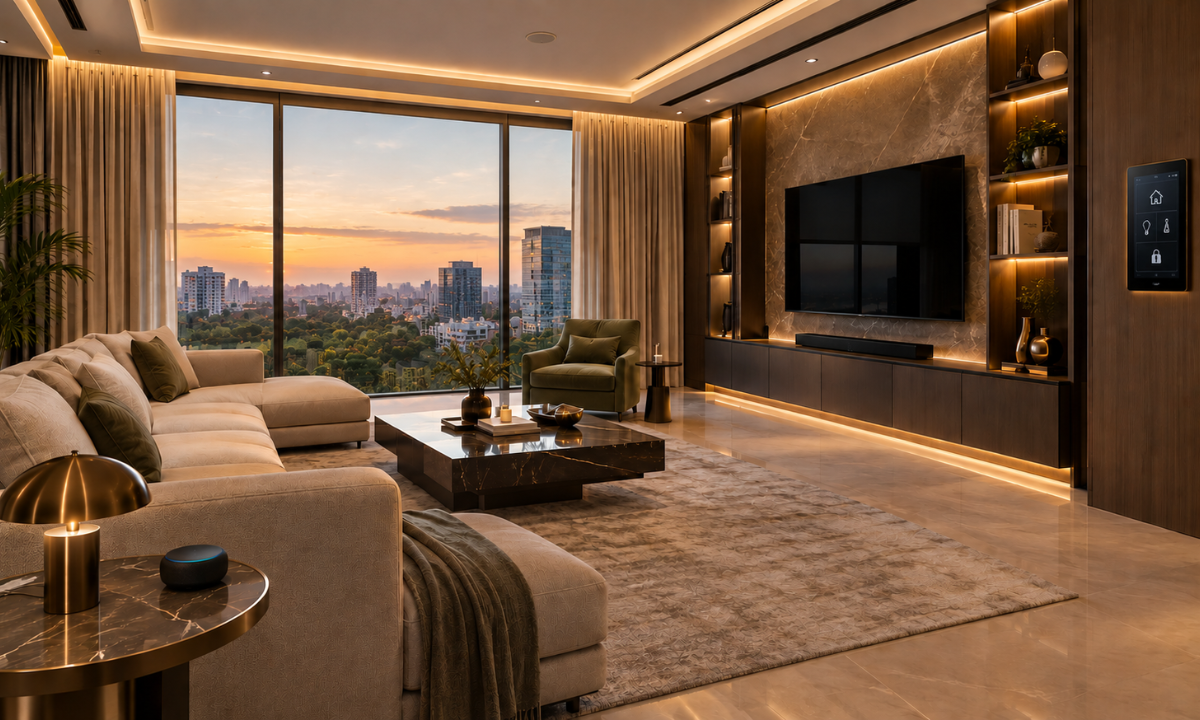
Smart Home Automation for Luxury Interiors: Designing Intelligent and Effortless Homes
Luxury interiors are no longer defined only by marble, premium furniture, custom woodwork or statement lighting.
Today, technology has become an important part of how a luxury home functions.
But in a truly refined interior, technology should not dominate the space. It should work quietly in the background, making everyday life more comfortable, convenient and intuitive.
This is where smart home automation for luxury interiors becomes important.
From automated lighting and climate control to motorised curtains, security systems, entertainment and centralised controls, home automation can connect different parts of a residence into one seamless experience.
At TheAEK, technology is considered as part of the overall interior rather than something added after the design is complete. The objective is simple: create a home where technology improves the experience without compromising the architecture, materials or aesthetics.
What Is Smart Home Automation?
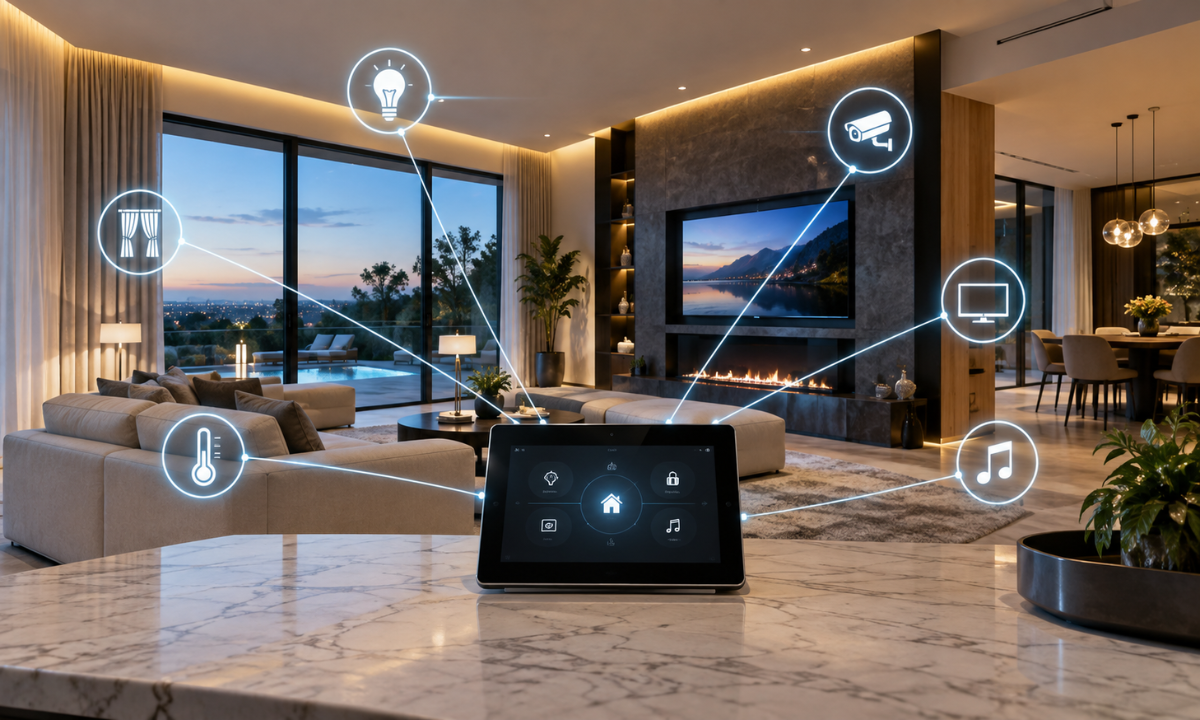
Smart home automation refers to the integration of different systems within a home so they can be controlled individually or together through a centralised system.
Depending on the residence and homeowner’s requirements, automation can include:
- Lighting
- Curtains and blinds
- Air conditioning
- Heating and cooling
- Home entertainment
- Security
- Door access
- Music
- Motorised furniture
- Sensors
- Irrigation
- Energy management
- Scene-based controls
Instead of operating each system separately, homeowners can create predefined settings or scenes that control multiple functions simultaneously.
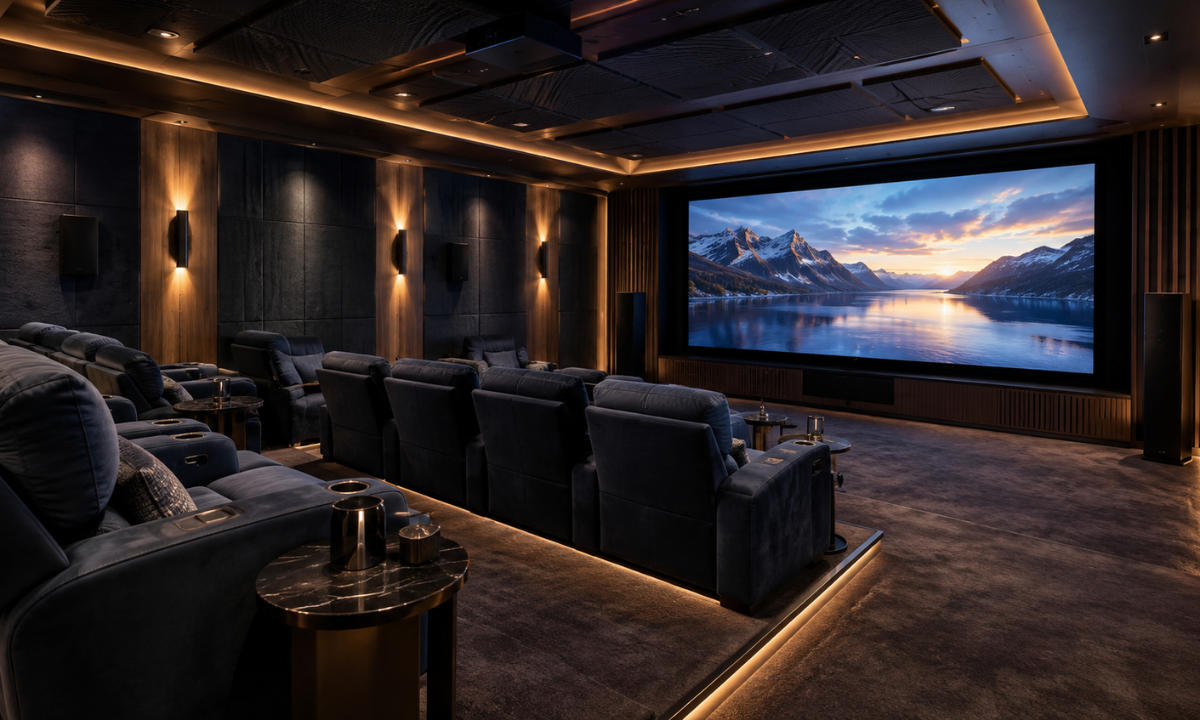
For example, a single “Movie Night” scene could dim the lights, close the curtains, switch on the home theatre and adjust the room environment.
The technology becomes almost invisible.
The homeowner simply experiences the result.
Why Smart Automation Matters in Luxury Interiors
Luxury homes often contain many different systems.
There may be several lighting circuits, air-conditioning zones, motorised curtains, entertainment systems, security devices and architectural features.
Without proper integration, controlling all of these systems can become complicated.
Smart automation brings them together.
The benefits can include:
- Greater convenience
- Better lighting control
- Improved energy management
- Enhanced security
- Personalised room settings
- Reduced visual clutter
- Easier everyday operation
- Better integration between technology and architecture
The most important benefit, however, is simplicity.
A sophisticated home should not feel complicated to operate.
1. Smart Lighting Automation
Lighting is one of the most important parts of luxury home automation.
Instead of controlling every light independently, homeowners can create lighting scenes based on different activities.
For example:
Morning Scene
The system can gradually increase lighting levels while opening selected curtains.
Evening Scene
Warm ambient lighting can be activated while unnecessary lights are switched off.
Dinner Scene
Dining lights can become the focus while surrounding lighting is reduced.
Movie Scene
The lights can dim, curtains can close and the entertainment system can activate.
Night Scene
Selected pathway and bedroom lights can remain at a low intensity for comfortable movement.
Smart lighting can therefore make the same room feel completely different at different times of the day.
TheAEK’s Luxury Lighting Design Guide explores how lighting can be integrated into luxury residential interiors.
2. Motorised Curtains and Blinds
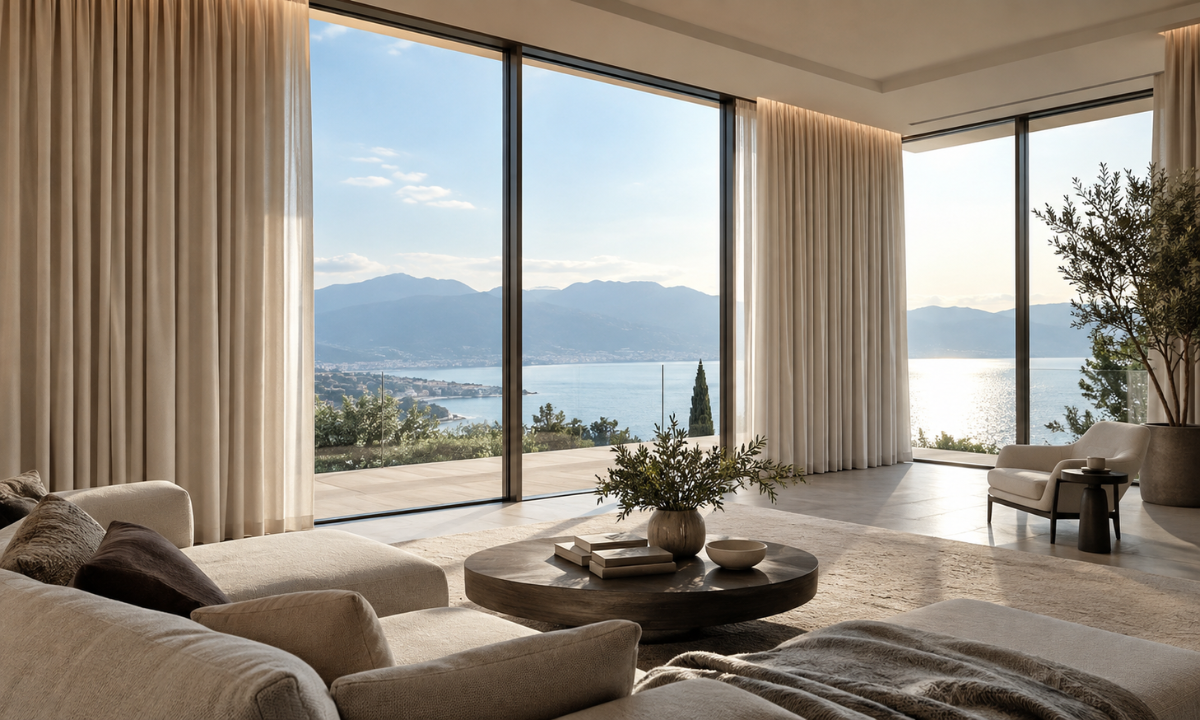
Large windows are an important feature in many luxury homes.
Motorised curtains and blinds allow homeowners to control daylight, privacy and atmosphere without manually operating every window covering.
They can be controlled through:
- Wall keypads
- Mobile devices
- Voice controls
- Automated schedules
- Light sensors
- Centralised home automation systems
For example, curtains can automatically open in the morning and close in the evening.
They can also respond to sunlight conditions to help manage glare and heat.
The result is particularly effective when the curtain tracks and motors are concealed within the architecture.
3. Smart Climate Control
Climate control is another important component of a luxury smart home.
Different rooms may require different temperature settings depending on their use.
A smart system can allow homeowners to create zones for:
- Bedrooms
- Living rooms
- Home offices
- Kitchens
- Entertainment rooms
- Guest rooms
- Dressing rooms
Instead of maintaining the same temperature throughout the entire home, the system can respond to occupancy and individual preferences.
This can also help reduce unnecessary energy consumption.
4. Automated Home Entertainment
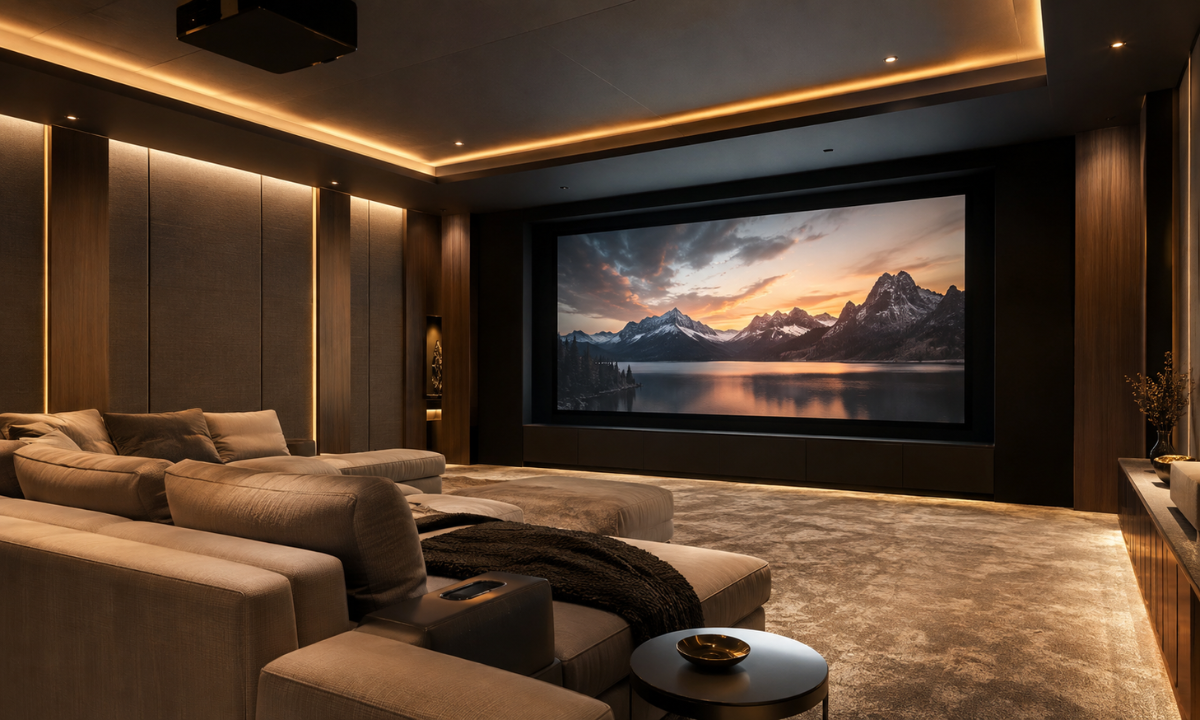
Entertainment systems can be integrated into the interior rather than appearing as separate technology.
A luxury entertainment system might include:
- Home theatre
- Distributed audio
- Hidden speakers
- Motorised screens
- Projectors
- Smart televisions
- Automated lighting
- Acoustic treatments
The technology can be concealed behind wall panels, ceilings, cabinetry or architectural elements.
This approach allows the room to remain visually clean when the system is not being used.
5. Smart Security Systems
Security is an important consideration for luxury residences.
Smart security can integrate:
- Video doorbells
- CCTV
- Smart locks
- Access control
- Motion sensors
- Door and window sensors
- Perimeter monitoring
- Automated gates
- Alarm systems
These systems can be connected to a central platform so homeowners can monitor different areas of the property.
However, security technology should be integrated discreetly.
Cameras, sensors and access systems should be positioned carefully so they do not unnecessarily disrupt the interior architecture.
6. Smart Home Scenes
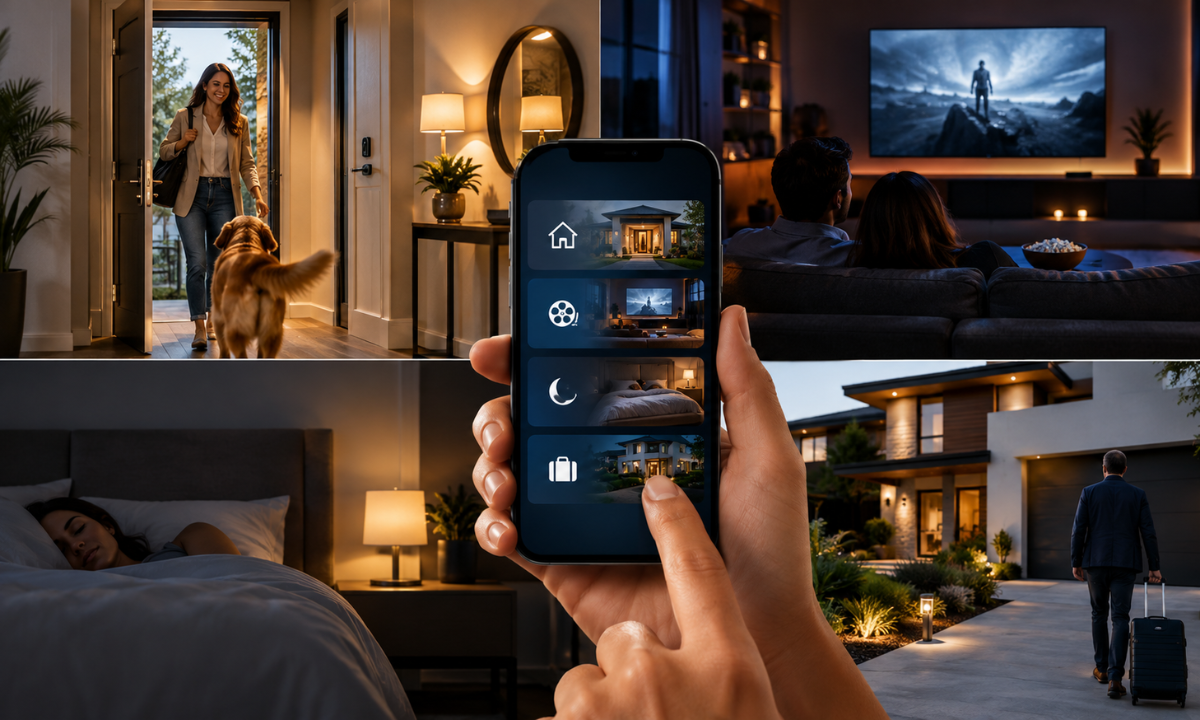
One of the biggest advantages of automation is the ability to create scenes.
A scene combines several actions into a single command.
For example:
Welcome Home
- Entrance lights turn on
- Curtains open
- Air conditioning starts
- Music begins
- Selected areas are illuminated
Entertaining
- Living room lighting adjusts
- Dining lights activate
- Music starts
- Curtains close
- Temperature adjusts
Goodnight
- Main lights switch off
- Bedroom lighting remains active
- Curtains close
- Security system activates
- Selected doors lock
Away Mode
- Lights switch off
- Air conditioning adjusts
- Curtains respond to programmed settings
- Security systems activate
This is where automation becomes genuinely useful.
The homeowner does not need to manage every individual device.
One command can activate the entire environment.
7. Smart Automation and Luxury Lighting
Lighting and automation should ideally be planned together.
A beautifully designed lighting system can become even more effective when connected to smart controls.
Modern lighting automation can include:
- Dimming
- Scene control
- Motion sensors
- Tunable white lighting
- Daylight response
- Automated schedules
- Occupancy-based control
TheAEK’s current material guidance also discusses smart lighting controls, tunable colour temperature and systems such as DALI-2 and KNX as part of integrated luxury interiors.
This is particularly useful in homes where lighting needs to change throughout the day.
8. Invisible Technology in Luxury Interiors
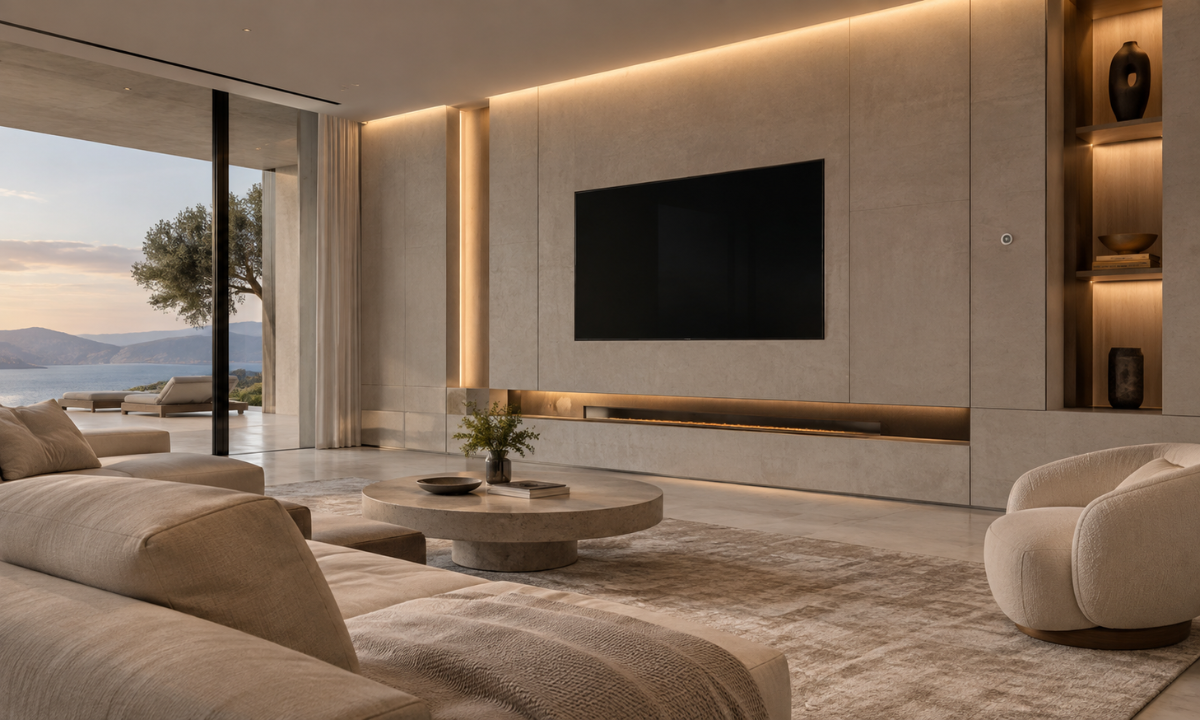
One of the most important principles of luxury automation is invisibility.
Technology should improve the experience without becoming the visual focus.
Instead of filling walls with switches and control panels, automation can be integrated into:
- Wall panelling
- Veneer
- Stone
- Glass
- Furniture
- Ceilings
- Architectural niches
TheAEK’s approach to premium interiors places emphasis on integrating technology with architectural materials rather than treating it as an independent layer.
This is especially important in minimalist and quiet-luxury interiors.
9. Smart Controls and Wall Design
Control panels are often overlooked during interior design.
A wall can look beautifully finished, but multiple switches and control panels can quickly create visual clutter.
Instead, the electrical and automation layout should be planned before the wall finishes are finalised.
For example, controls can be integrated into a carefully designed panel alongside:
- Lighting controls
- Curtain controls
- Climate controls
- Security functions
This creates a cleaner visual result.
For ideas on integrating architectural detailing, explore TheAEK’s Luxury Wall Panel Design Guide.
10. Automation With Premium Materials
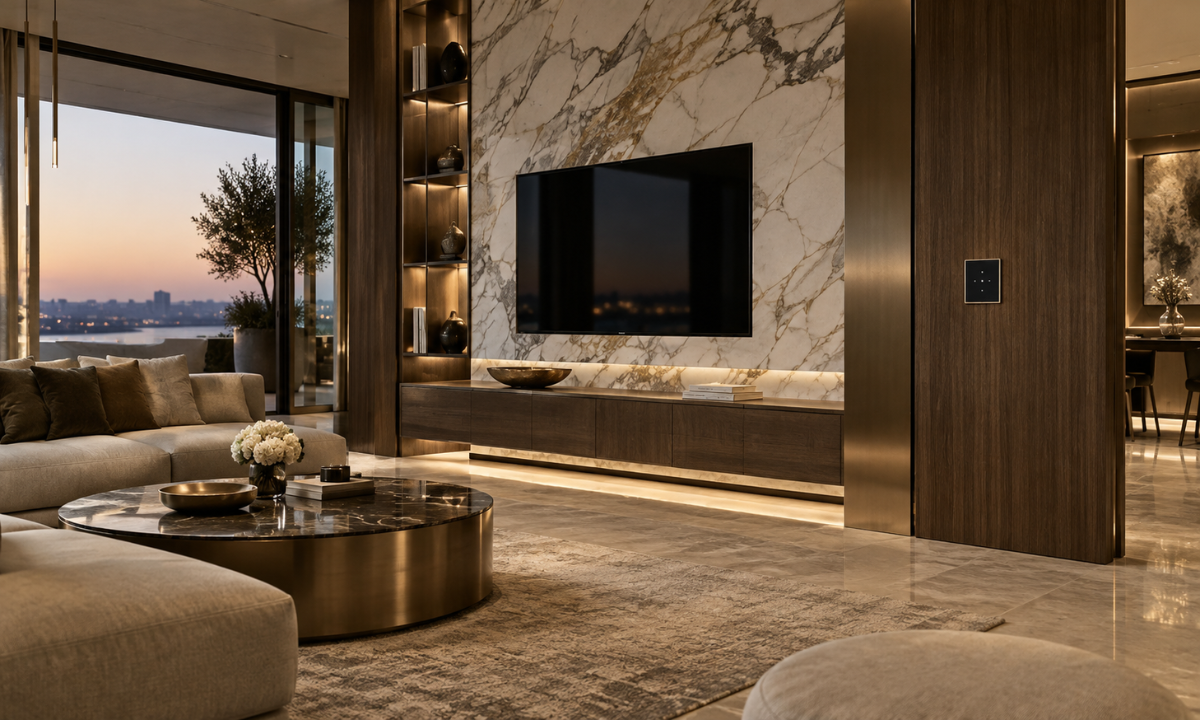
Technology should work with the material palette rather than against it.
Consider a living room featuring:
- Italian marble
- Premium veneer
- Bronze detailing
- Soft upholstery
- Integrated lighting
The automation controls should complement those materials.
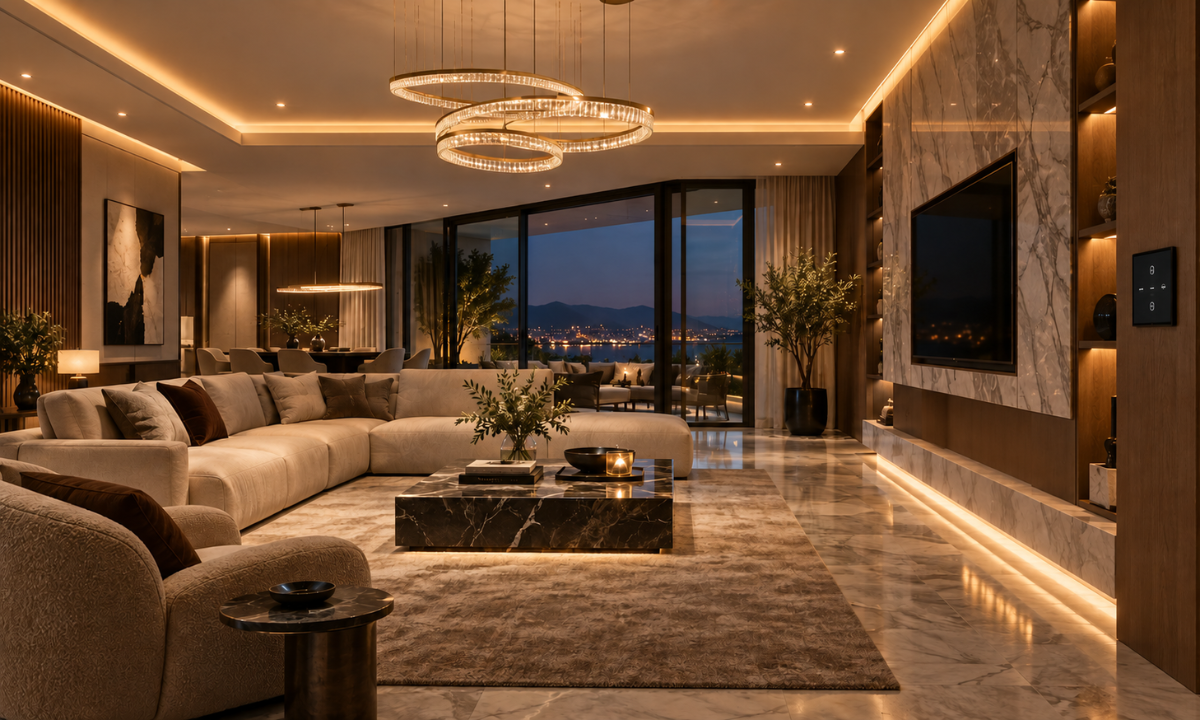
For example, a flush control panel with a carefully selected finish can feel like part of the architecture rather than an electronic device.
This is why technology planning should happen alongside material selection.
TheAEK’s Premium Materials for Luxury Interior Projects explores how materials, lighting and smart controls can work together within luxury interiors.
11. Smart Automation for Bedrooms
Bedrooms can benefit significantly from automation because many daily activities are routine.
A bedroom automation system can control:
- Bedside lighting
- Curtains
- Air conditioning
- Temperature
- Music
- Television
- Reading lights
- Night lighting
A single bedside control can allow the homeowner to activate a personalised night scene without getting out of bed.
For example:
Goodnight
- Main lights off
- Curtains closed
- Air conditioning adjusted
- Bedside lights dimmed
- Security activated
The result is convenience without unnecessary complexity.
12. Smart Kitchens
Modern luxury kitchens contain multiple appliances and lighting zones.
Automation can help coordinate:
- Under-cabinet lighting
- Ambient lighting
- Pendant lighting
- Exhaust systems
- Motorised blinds
- Climate control
- Audio
The kitchen should still feel like a beautifully designed space rather than a technology showroom.
Automation should remain subtle and intuitive.
13. Smart Bathrooms
Bathrooms can also incorporate carefully selected automation.
Depending on the project, technology may include:
- Automated lighting
- Mirror lighting
- Exhaust control
- Under-vanity lighting
- Temperature control
- Music
- Occupancy sensors
Motion sensors can be especially useful for low-level night lighting.
For example, when someone enters the bathroom at night, low-intensity lighting can activate without turning on the full lighting system.
14. Smart Home Offices
Home offices require a different automation approach.
Lighting, temperature, glare and acoustics can all influence comfort and productivity.
A smart office can include:
- Task lighting
- Motorised blinds
- Climate control
- Video conferencing
- Automated privacy
- Audio systems
- Scene controls
A “Work” scene could activate the appropriate lighting, adjust the blinds and set the preferred room temperature.
15. Automation for Large Luxury Homes
Large residences can particularly benefit from centralised automation.
A large home may have multiple:
- Floors
- Bedrooms
- Living areas
- Entertainment spaces
- Outdoor areas
- Lighting zones
- Climate zones
Without integration, managing these systems can become cumbersome.
A centralised automation system allows homeowners to control individual rooms or the entire property.
It can also provide different levels of access for homeowners, family members, staff and guests.
16. Smart Home Automation and Energy Management
Automation is not only about convenience.
It can also help manage energy consumption.
For example:
- Lights can switch off when rooms are unoccupied.
- Air conditioning can be adjusted based on occupancy.
- Curtains can respond to sunlight.
- Outdoor lighting can operate according to schedules.
- Unnecessary systems can be switched off when the home is vacant.
The goal is not simply to automate everything.
The goal is to make the home more responsive.
17. Smart Automation for Outdoor Spaces
Luxury residences increasingly include outdoor living areas.
Automation can extend into:
- Gardens
- Terraces
- Balconies
- Pool areas
- Outdoor kitchens
- Entertainment spaces
Outdoor lighting, music, irrigation, security and shading can all be integrated where appropriate.
For example, an evening outdoor scene could activate landscape lighting and entertainment systems while adjusting selected indoor lighting.
18. Voice Control vs Wall Controls
Voice control can be convenient, but it should not necessarily replace physical controls.
A well-designed luxury home can use a combination of:
- Physical keypads
- Touch panels
- Mobile apps
- Voice control
- Automated schedules
- Sensors
The homeowner should have multiple ways to control important systems.
The most frequently used functions should remain simple and immediately accessible.
19. Why Automation Should Be Planned During Interior Design
One of the biggest mistakes is treating home automation as an afterthought.
If technology is planned after the interior design has already been completed, it may result in:
- Visible wiring
- Additional switches
- Poorly positioned sensors
- Unnecessary wall cutting
- Exposed equipment
- Compromised aesthetics
Instead, automation should be considered during the initial design stages.
Electrical points, control locations, sensor positions, lighting circuits, curtain pockets, speakers and equipment spaces can then be coordinated with the architecture.
This creates a much cleaner result.
20. The Role of TheAEK in Smart Luxury Interiors
At TheAEK, the objective is not to add technology simply because it is available.
The starting point is how the homeowner actually lives.
Daily routines, preferences, entertaining habits, privacy requirements and the architectural character of the home all influence the design.
Automation can then be integrated into the wider interior system.
This may involve coordinating:
- Architecture
- Lighting
- Furniture
- Wall treatments
- Flooring
- Ceiling design
- Climate control
- Entertainment
- Security
- Smart controls
TheAEK’s overall philosophy is centred on designing around how the homeowner lives rather than following a fixed template.
Smart Home Automation: What Should Be Automated?
Not everything needs to be automated.
A useful approach is to automate systems that genuinely improve everyday life.
| Home Feature | Potential Automation |
|---|---|
| Lighting | Dimming, scenes, schedules |
| Curtains | Open/close, schedules, sunlight response |
| Air conditioning | Zones, schedules, occupancy |
| Entertainment | One-touch scenes |
| Security | Locks, cameras, alarms |
| Garden | Irrigation schedules |
| Outdoor lighting | Timers and sensors |
| Bedroom | Night scenes |
| Living room | Entertainment and lighting scenes |
| Home office | Work scenes |
| Entry | Welcome and security scenes |
The best automation system is not necessarily the one with the largest number of features.
It is the one that makes the home easier to live in.
How to Create a Truly Luxury Smart Home
A successful smart home should follow a few principles.
1. Start With Lifestyle
Understand how the homeowner actually uses the space.
2. Plan Technology Early
Automation should be considered during architectural and interior planning.
3. Keep Controls Simple
Technology should reduce complexity, not create it.
4. Hide Where Possible
Speakers, wiring, sensors and equipment should be integrated discreetly.
5. Coordinate Materials
Switches and controls should complement the surrounding materials.
6. Create Useful Scenes
Automate routines that homeowners actually perform.
7. Allow Manual Control
Important functions should remain accessible even without automation.
8. Plan for the Future
The system should allow for future upgrades where practical.
Final Thoughts
Smart home automation has changed the way luxury interiors can be designed.
The value is not simply in controlling lights from a phone or asking a voice assistant to close the curtains.
The real opportunity is to create a home where lighting, climate, entertainment, security and architectural features work together naturally.
The technology should disappear into the experience.
You should not walk into a luxury home and think about how many automated systems it contains.
You should simply notice that the lighting feels right, the temperature is comfortable, the curtains respond naturally and everything works with minimal effort.
That is where smart home automation becomes part of luxury interior design rather than an additional layer of technology.
At TheAEK, the focus is on creating homes that are personal, refined and resolved. By integrating automation with architecture, lighting, materials and everyday routines, technology can become almost invisible while making the home significantly more intuitive.
Frequently Asked Questions
What is smart home automation in luxury interiors?
Smart home automation connects systems such as lighting, curtains, climate control, entertainment and security so they can be controlled individually or together through a centralised system.
What can be automated in a luxury home?
Lighting, curtains, air conditioning, entertainment, security, access control, irrigation, outdoor lighting and selected appliances can all potentially be automated.
Is smart lighting important for luxury interiors?
Yes. Smart lighting can create different scenes for activities such as entertaining, dining, watching movies, relaxing and sleeping.
Can home automation be hidden?
Yes. Controls, sensors, speakers, wiring and equipment can often be integrated into walls, ceilings, furniture and architectural features.
Should home automation be planned before interior design?
Ideally, yes. Planning automation early allows electrical systems, lighting, sensors, speakers, curtain tracks and control points to be coordinated with the interior design.
Can smart home automation save energy?
Automation can help reduce unnecessary energy use by controlling lighting, air conditioning, curtains and other systems based on schedules, occupancy and environmental conditions.
Can I control the entire home from one system?
Depending on the automation platform and system architecture, multiple home systems can be integrated into a centralised control interface.
Is voice control enough for a luxury smart home?
Voice control can be useful, but it is generally better treated as one control method alongside physical keypads, touch panels, mobile controls, sensors and automated scenes.
Does TheAEK provide smart home automation as part of luxury interiors?
TheAEK integrates home automation with interior architecture, lighting, materials and spatial planning as part of its luxury interior approach. The current TheAEK website specifically describes automation as part of its integrated luxury interior methodology.