
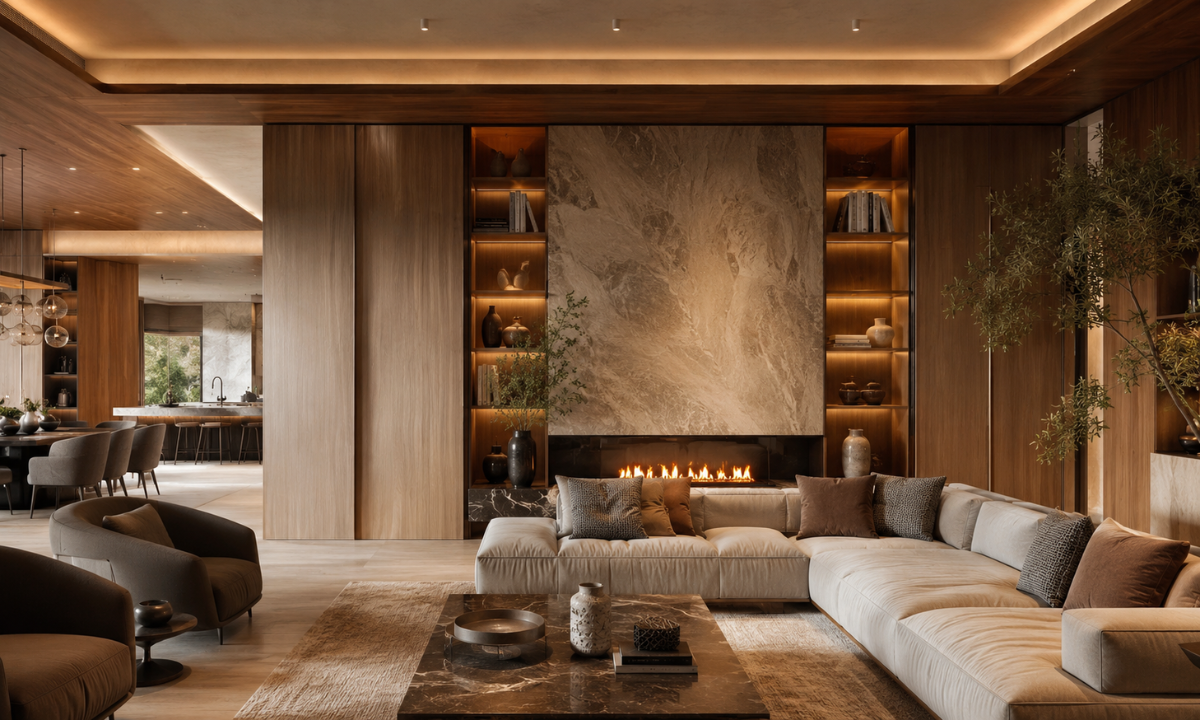
Premium Veneer Interior Design Guide: Creating Warm and Refined Luxury Homes
Luxury interiors do not always need to be bold to make an impression.
Sometimes, the most sophisticated spaces are built around natural textures, carefully selected materials, soft lighting, and simple architectural details. Premium veneer is one material that can bring all of these qualities together.
With its natural grain, depth, warmth, and ability to cover large surfaces seamlessly, veneer can be used across walls, wardrobes, doors, cabinetry, furniture, and architectural features.
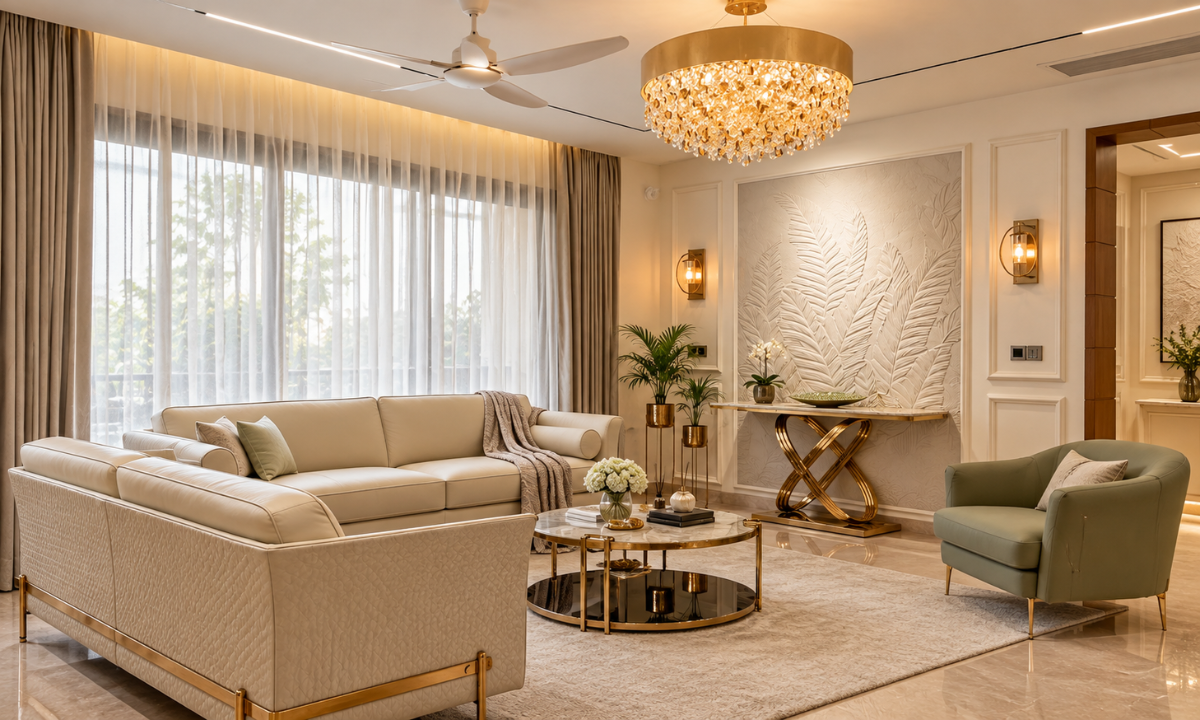
A well-planned premium veneer interior design can make a home feel warm and refined without making it look overly decorated, especially in Ultra Luxury Interiors in Gurgaon.
For high-end residences, the real value of veneer comes from how it is selected, matched, finished, and integrated with the architecture.
What Is Veneer?
Veneer is a thin layer of natural wood applied over a suitable core material.
Unlike printed wood-look finishes, natural veneer comes from real timber. The grain, colour, knots, and natural variations can therefore give each surface a distinct appearance.
It allows designers to bring the character of natural wood into larger areas while offering greater flexibility in terms of design and fabrication.
Veneer can be used for:
- Wall panelling
- Wardrobes
- Doors
- TV units
- Kitchen cabinetry
- Study furniture
- Home bars
- Bookshelves
- Bed back panels
- Custom furniture
- Architectural partitions
The final appearance depends on both the veneer species and the way it is cut, arranged, finished, and installed.
Why Premium Veneer Works Well in Luxury Interiors
Natural stone can bring drama to a room, while metal can introduce precision and contrast.
Veneer brings warmth.
This makes it particularly valuable in luxury interiors where large spaces can otherwise feel cold because of extensive use of stone, glass, and metal.
Premium veneer can provide:
- Natural texture
- Visual warmth
- Architectural continuity
- Subtle variation
- Sophisticated detailing
- A timeless appearance
It can also work across different design styles, from contemporary and minimalist interiors to more classic and traditional residences.
Premium Veneer vs Laminate
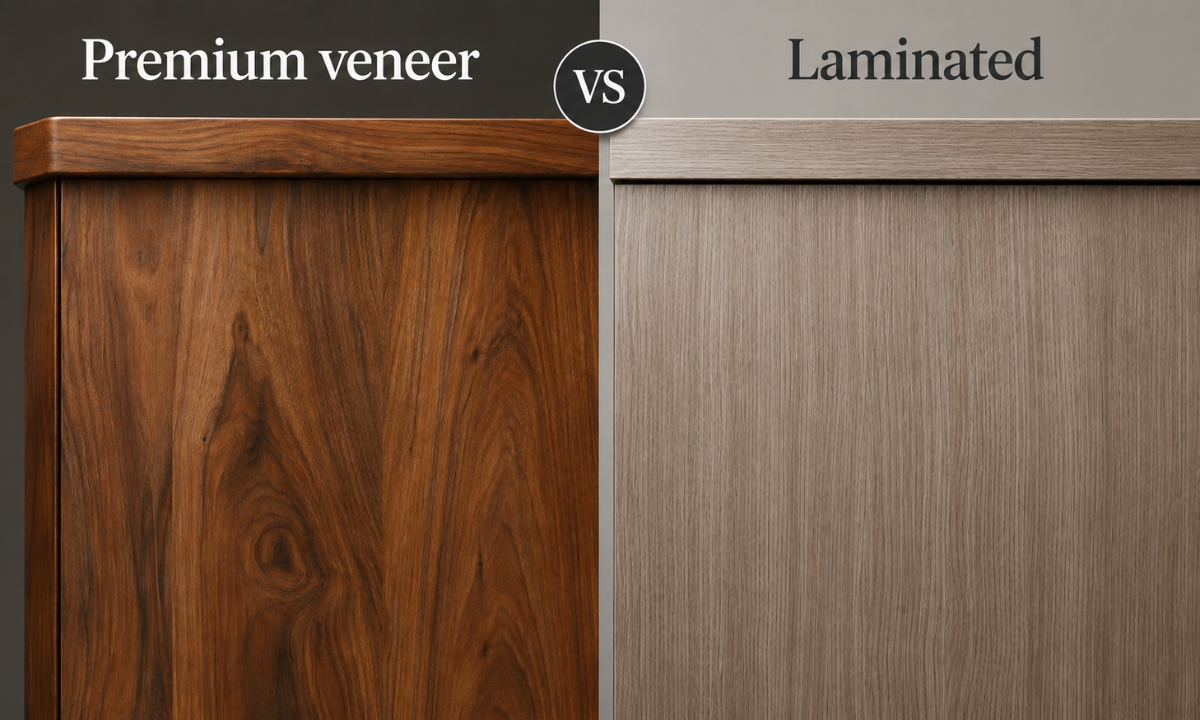
One of the common questions homeowners ask is whether veneer is better than laminate.
The answer depends on what you want from the material and your material choices for luxury interiors.
Premium Veneer
Natural veneer offers:
- Genuine wood character
- Natural grain variation
- Ability to be stained or refinished
- A more organic appearance
- Greater material authenticity
Laminate
Laminate can offer:
- Consistent patterns
- A wide range of colours
- Easy cleaning
- Various textures
- Potentially lower cost
Neither material is automatically right for every application.
For a luxury residence where natural material character is important, premium veneer can provide a depth and authenticity that printed wood finishes cannot completely reproduce.
Popular Veneer Choices for Luxury Interiors
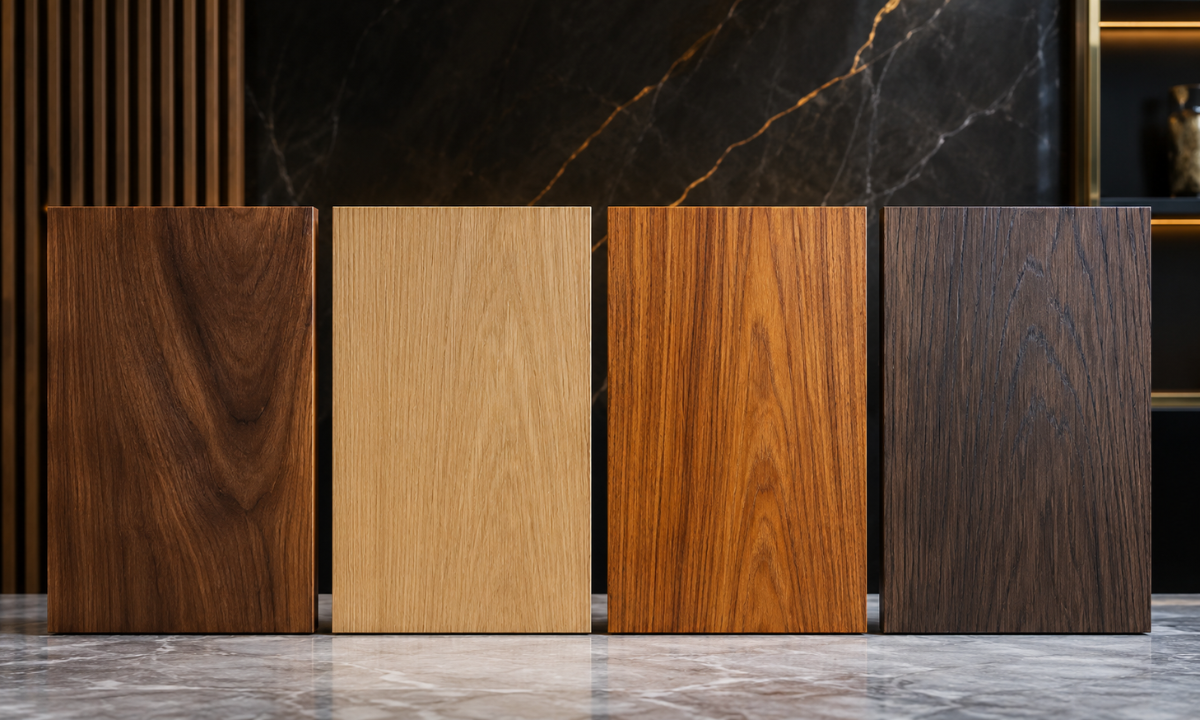
Different timber species create different moods.
Walnut Veneer
Walnut has a rich, deep tone and is often associated with sophisticated interiors.
It can work particularly well in:
- Libraries
- Home offices
- Master bedrooms
- Living rooms
- Home bars
- Private lounges
Walnut can create a dramatic atmosphere when paired with darker stone and warm lighting.
Oak Veneer
Oak offers a lighter and more versatile appearance.
It can be used in contemporary homes where the objective is to create a bright and natural interior.
Oak pairs particularly well with:
- Travertine
- Light marble
- Neutral fabrics
- Bronze
- Brass
- Soft lighting
Teak Veneer
Teak has a naturally warm character and can work beautifully in both modern and classic interiors.
It can be used for:
- Wall panels
- Doors
- Furniture
- Cabinetry
- Bedroom interiors
Its warm colour can create a comfortable residential atmosphere.
Smoked Veneer
Smoked finishes can give timber a deeper and more sophisticated appearance.
They are particularly suitable for contemporary luxury interiors where designers want darker natural tones without relying on painted surfaces.
Grain Direction Matters
One of the details that separates ordinary woodwork from high-end joinery is the way the grain is planned.
The grain can be arranged:
- Vertically
- Horizontally
- Continuously across panels
- Symmetrically
- In book-matched patterns
For example, a full-height wall with vertical grain can emphasise ceiling height.
Horizontal grain can visually widen a wall.
The decision should therefore be made as part of the architectural design rather than after the cabinet has already been fabricated.
Book-Matched Veneer
Book-matching is a technique where adjacent veneer sheets are mirrored to create a symmetrical grain pattern.
When done well, it can create a striking visual effect.
It can be used on:
- Feature walls
- Bed back panels
- Cabinet doors
- Study walls
- Dining room panelling
- Custom furniture
Book-matching requires careful selection and sequencing of veneer sheets.
The natural grain should flow continuously across the finished surface.
Veneer Feature Walls
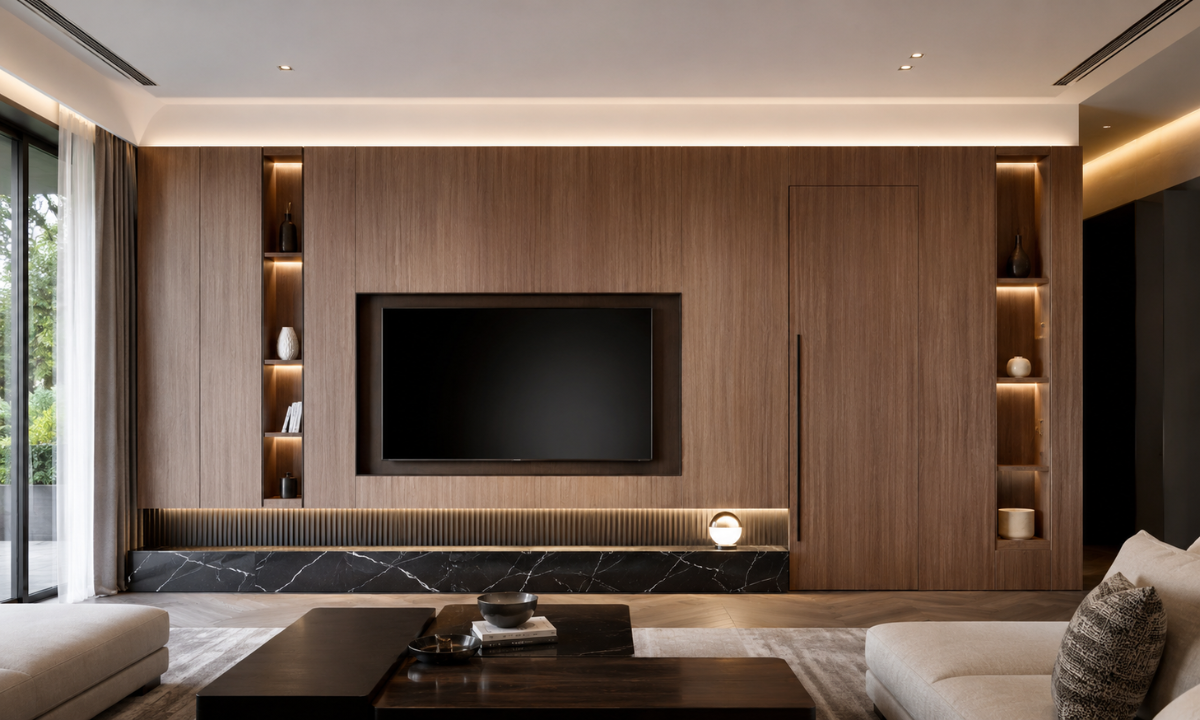
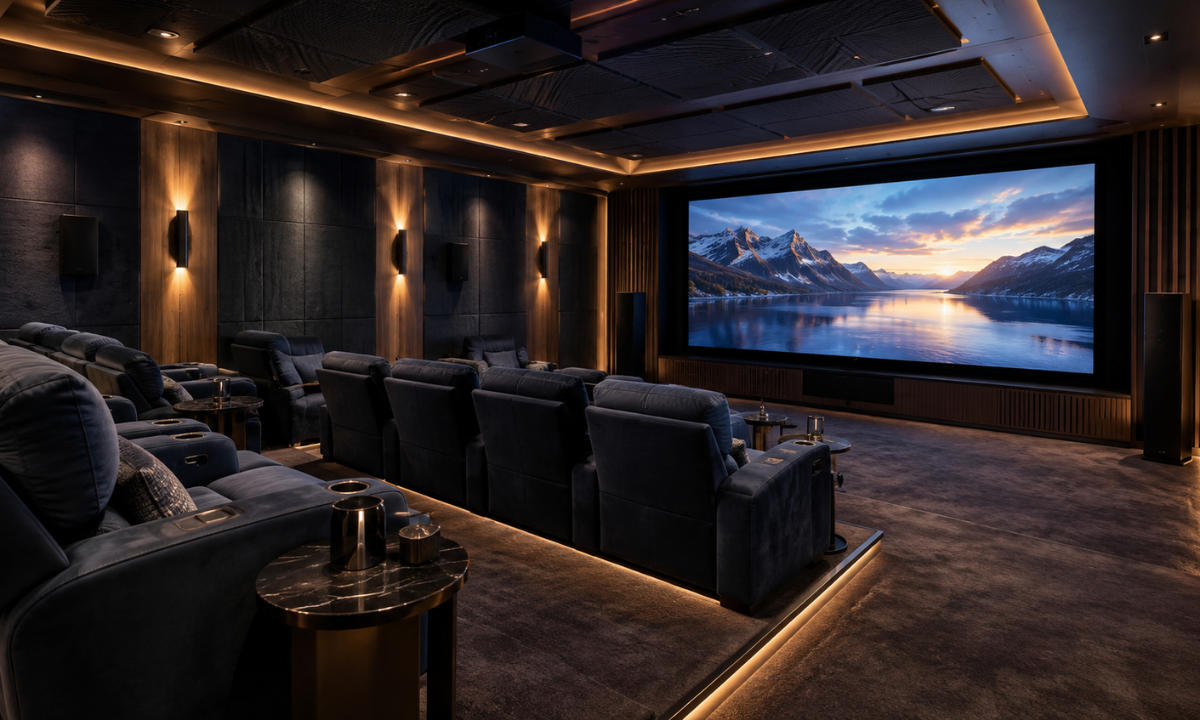
A premium veneer feature wall can add warmth without requiring additional decoration.
Instead of covering the wall with artwork, decorative mouldings, or multiple materials, the natural grain itself becomes the feature.
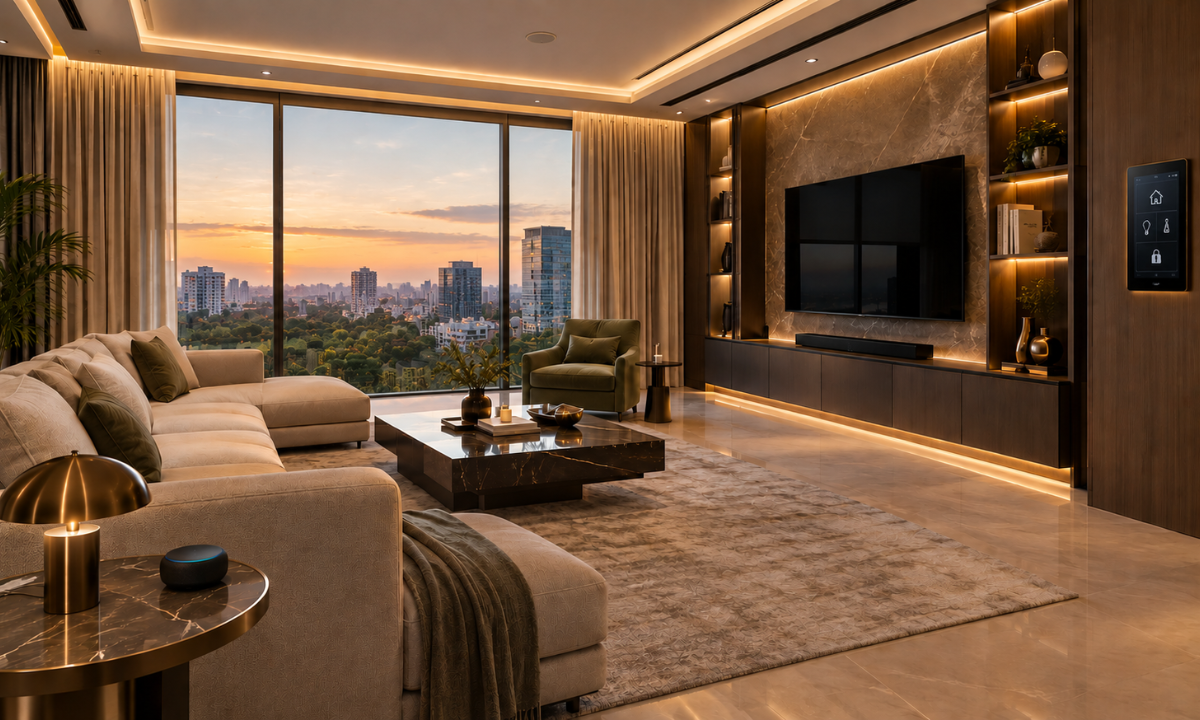
A veneer wall can integrate:
- TV
- Storage
- Hidden doors
- Lighting
- Display niches
- Electrical points
This creates a clean architectural appearance.
In a large living room, a full-height timber wall can also help make the space feel more intimate.
Premium Veneer for Luxury Bedrooms
Bedrooms benefit particularly well from natural wood tones.
A veneer bed-back wall can become the visual anchor of the room.
It can be combined with:
- Upholstered panels
- Integrated lighting
- Side tables
- Floating storage
- Marble
- Brass details
For a calm bedroom, lighter oak or warm natural veneer can create a softer atmosphere.
For a more dramatic master suite, walnut or smoked veneer can provide greater depth.
Veneer Wardrobes and Dressing Rooms
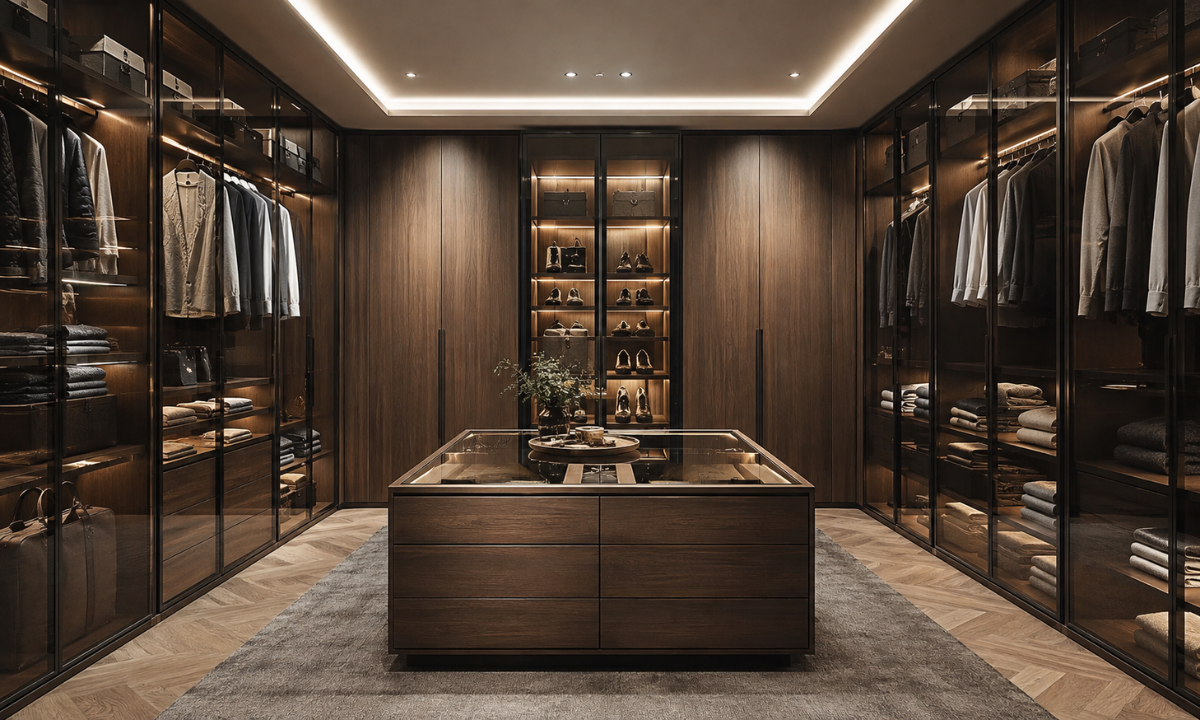
Veneer can give wardrobes a more furniture-like appearance.
Instead of making wardrobes visually dominant, designers can integrate them into the architecture.
Full-height veneer wardrobes can be combined with:
- Glass
- Bronze frames
- Integrated LED lighting
- Concealed handles
- Soft-close hardware
- Open display niches
In a luxury dressing room, veneer can also be used for drawers, islands, shelving, and wall panels to create a consistent material palette.
Premium Veneer for Home Offices
A home office can benefit from the warmth of natural timber.
A custom veneer study can include:
- Full-height bookshelves
- Desk
- Storage cabinets
- Display areas
- Cable management
- Integrated lighting
Walnut works well for a traditional executive appearance, while lighter oak can create a contemporary workspace.
The objective should be to create a productive environment without making the room feel overly corporate.
Veneer in Luxury Kitchens
Veneer can also be used in high-end kitchens.
Applications can include:
- Cabinet shutters
- Island panels
- Tall units
- Breakfast counters
- Feature walls
- Pantry doors
However, kitchen environments involve moisture, heat, steam, and frequent cleaning.
The veneer specification, substrate, edge treatment, finish, and installation need to be appropriate for the application.
For areas exposed to heavy cooking, a designer may recommend different materials depending on the specific requirements.
Veneer and Italian Marble
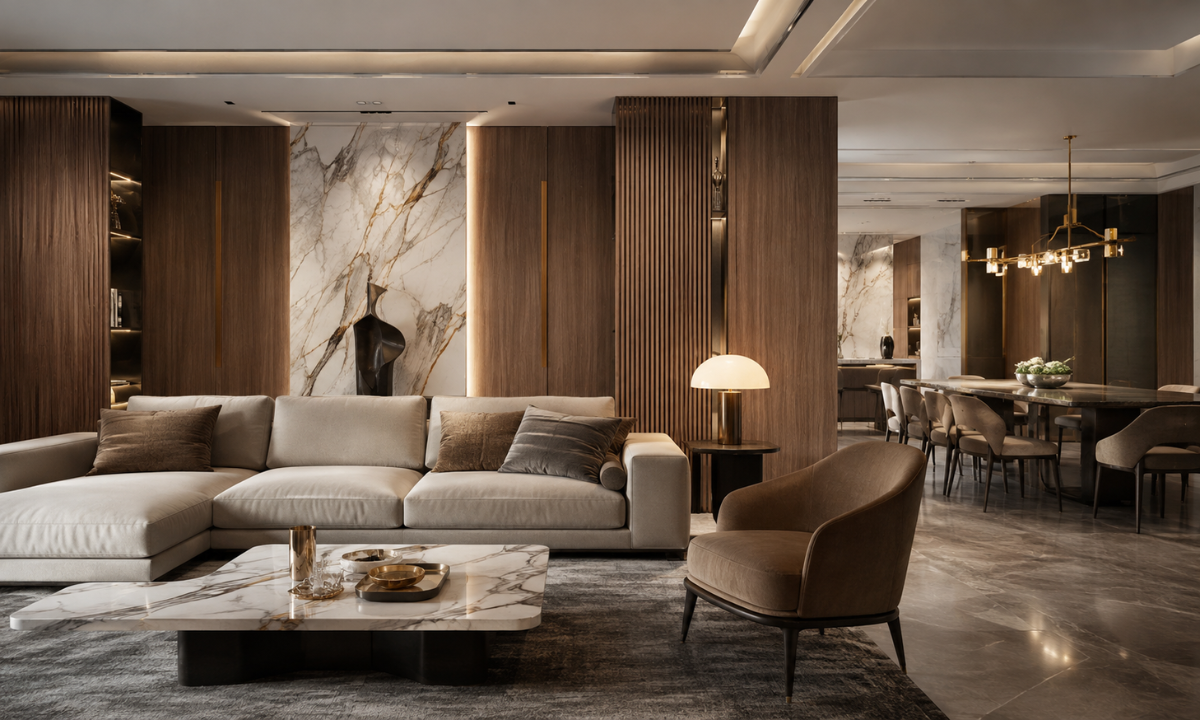
Premium veneer works particularly well with natural stone.
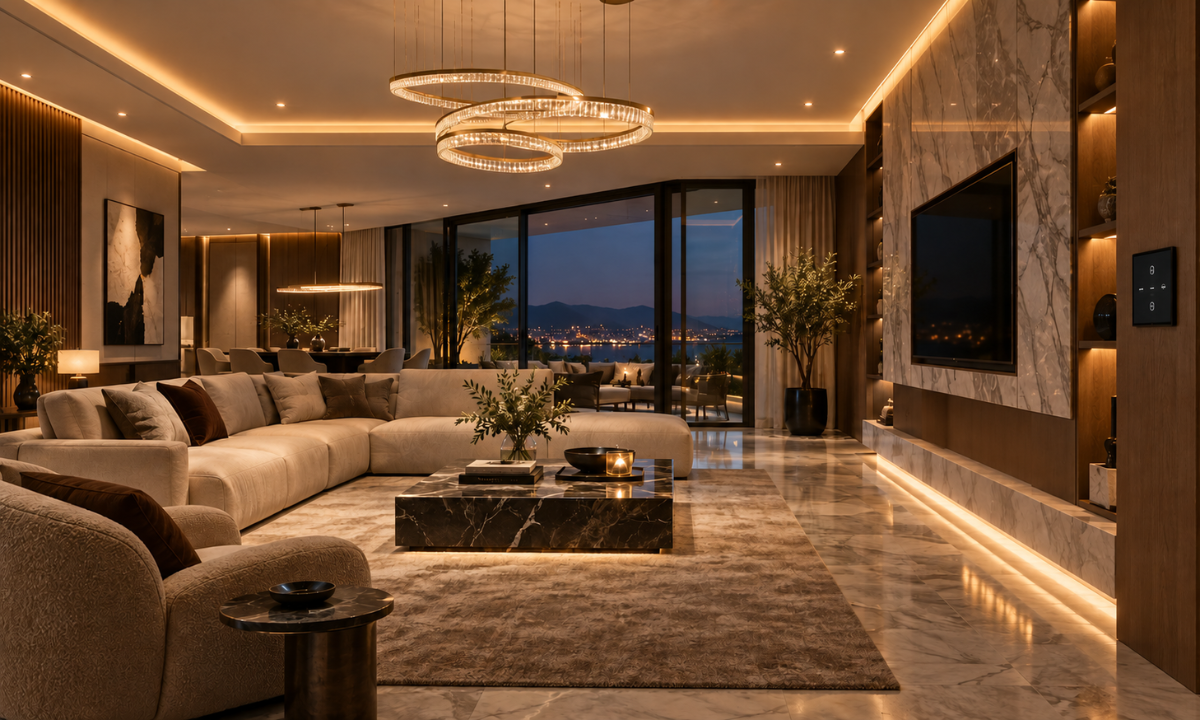
The contrast between warm timber and cool marble can create a sophisticated material palette and inspire elegant Italian interior design ideas.
For example:
Walnut veneer + Calacatta marble + brushed brass
Creates a rich luxury appearance.
A lighter combination such as:
Oak veneer + Travertine + bronze
can create a softer, more natural atmosphere.
The important thing is to maintain a balance between the materials.
If both the marble and veneer have strong patterns, the room may become visually busy.
Veneer and Metal Finishes
Metal details can add refinement to veneer surfaces.
Popular combinations include:
- Walnut + bronze
- Oak + brushed brass
- Smoked veneer + gunmetal
- Teak + champagne metal
Metal can appear in:
- Handles
- Cabinet trims
- Door frames
- Shelving
- Lighting
- Furniture details
It should generally be used as an accent rather than dominating the design.
Veneer and Lighting
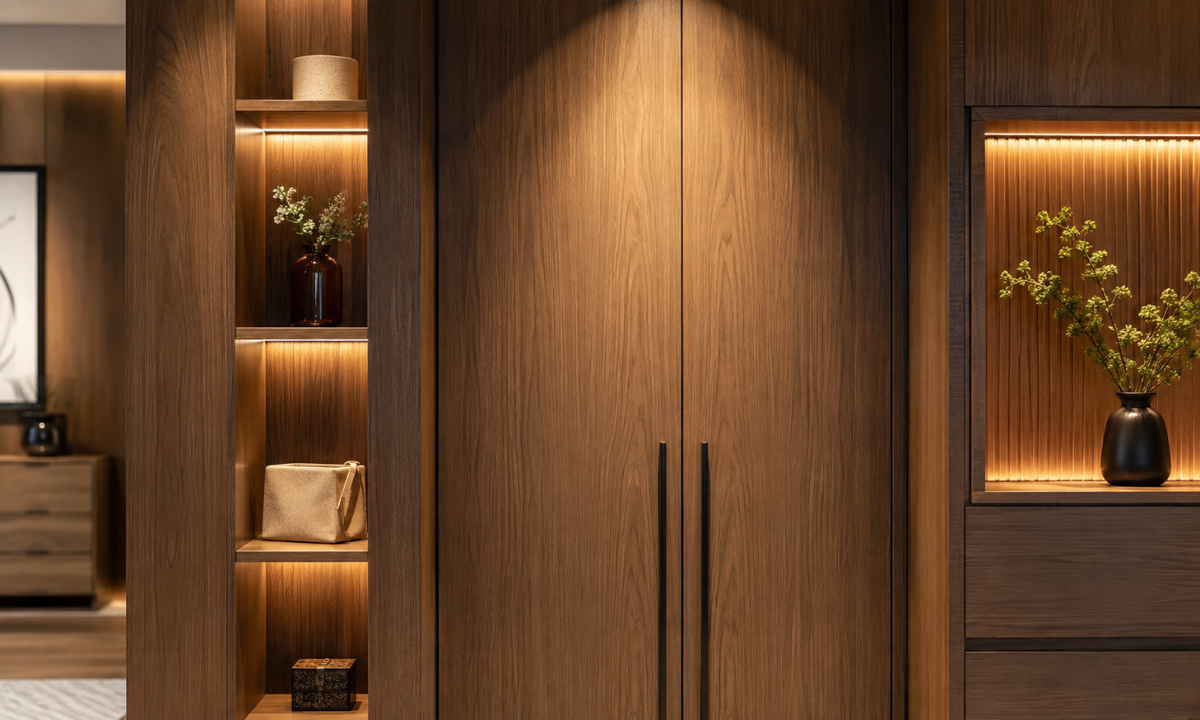
Lighting can dramatically change how veneer looks.
Warm lighting can bring out the depth of the wood grain, while cooler light can make some timber tones appear different.
Integrated lighting can be placed inside:
- Wardrobes
- Shelves
- Display units
- Bed back panels
- Wall niches
- Kitchen cabinetry
The lighting should be planned before fabrication.
Trying to add concealed lighting after the joinery is installed can lead to visible wires and compromises in detailing.
Choosing the Right Veneer Finish
The finish affects both appearance and maintenance.
Natural Matte Finish
A matte finish creates a soft and understated appearance.
It works particularly well in modern luxury interiors.
Satin Finish
A satin finish provides a subtle level of sheen without becoming highly reflective.
It can be useful for cabinetry and furniture.
High-Gloss Finish
Gloss finishes can create a more dramatic appearance, although they may reduce some of the natural visual character of the timber.
Stained Finish
Staining can alter the colour of natural veneer while retaining its grain.
This provides designers with more flexibility when coordinating the veneer with stone, flooring, fabrics, and furniture.
How to Select Premium Veneer
Choosing veneer should involve more than selecting a colour from a catalogue.
Look at Full Samples
Small samples may not accurately represent how the grain will appear across a large wall.
Check Grain Consistency
For large architectural surfaces, grain continuity is important.
Understand the Species
Different timber species have different characteristics.
Discuss the Finish
Ask whether the surface will be matte, satin, stained, or another finish.
Check the Substrate
The core material underneath the veneer contributes to the stability and performance of the finished panel.
Ask About Maintenance
Understand how the surface should be cleaned and protected.
How Much Does Premium Veneer Interior Design Cost?
There is no single price for premium veneer interiors.
The final cost depends on:
- Veneer species
- Veneer quality
- Surface area
- Core material
- Thickness
- Grain matching
- Book-matching
- Finish
- Hardware
- Custom detailing
- Integrated lighting
- Fabrication
- Installation
A simple veneer cabinet will have a very different cost from a full-height architectural wall with book-matched veneer, concealed doors, integrated lighting, and custom hardware.
This is why luxury interior projects should be priced according to the complete specification rather than only a generic per-square-foot rate.
Common Mistakes With Veneer Interiors
Choosing Veneer Only by Colour
Two veneers can have similar colours but completely different grain patterns and character.
Ignoring Grain Direction
The direction of the grain can dramatically affect the appearance of a large wall.
Using Too Many Timber Species
Multiple wood tones can make a luxury home feel visually disconnected.
Poor Edge Detailing
Small details around edges and joints can become highly visible in premium interiors.
Ignoring Lighting
The right lighting can enhance veneer, while the wrong lighting can flatten its appearance.
Choosing the Wrong Finish
The finish should be appropriate for the room and expected usage.
Premium Veneer and Quiet Luxury
Quiet luxury is not about displaying as many expensive materials as possible.
It is about creating an environment where the quality of the materials is noticeable without becoming overwhelming.
Premium veneer fits naturally into this philosophy.
A single full-height oak wall, a carefully detailed walnut library, or a beautifully crafted dressing room can provide more character than an interior filled with multiple decorative finishes.
The natural grain becomes part of the experience.
The focus moves from decoration to material quality, proportion, craftsmanship, and comfort.
Premium Veneer for Gurgaon Luxury Homes
Gurgaon’s high-end residential market includes apartments, penthouses, villas, and large private residences.
Each property presents different opportunities for veneer interiors.
Luxury Apartments
Use veneer strategically for TV units, wardrobes, feature walls, and integrated furniture.
Penthouses
Larger spaces can accommodate full-height wall panelling, libraries, private lounges, and statement joinery.
Luxury Villas
Villas offer opportunities for extensive architectural woodwork across staircases, double-height areas, home offices, bars, and entertainment spaces.
The material palette should remain consistent throughout the home while allowing individual rooms to have their own character.
The AEK Approach to Premium Veneer Interior Design
For premium veneer interior design, The AEK approaches natural timber as an architectural material rather than simply a cabinet finish.
The veneer is selected according to the project’s architectural language, lighting, furniture, stone, metal finishes, and overall material palette.
Grain direction, panel proportions, concealed doors, joinery details, hardware, and integrated lighting can all be considered during the design process.
This approach is particularly valuable in ultra-luxury homes, where small inconsistencies can become noticeable across large surfaces.
The aim is to create interiors where veneer feels naturally integrated into the architecture.
Instead of appearing as furniture placed against a wall, the woodwork becomes part of the wall, room, and overall spatial experience.
Final Thoughts
Premium veneer can bring warmth, depth, and natural character to a luxury home.
But the material itself is only the starting point.
The real difference comes from how the veneer is selected, cut, matched, finished, illuminated, and installed.
A successful premium veneer interior design does not need to use timber everywhere.
It uses the material strategically and allows its natural grain to complement stone, metal, glass, fabrics, and architectural elements.
For homeowners creating an ultra-luxury residence, premium veneer can be an excellent choice when authenticity, warmth, and refined craftsmanship are important.
With thoughtful design and precise execution, natural timber can become one of the most memorable elements of the home.
The AEK Ultra Luxury Interior Designer approach brings together material selection, architectural planning, bespoke joinery, lighting, furniture, and execution to create interiors that feel sophisticated, warm, and timeless.
Frequently Asked Questions
What is premium veneer in interior design?
Premium veneer is a thin layer of natural wood applied over a suitable core material. It provides the authentic appearance and grain of real timber while allowing it to be used across larger architectural surfaces and custom joinery.
Is veneer suitable for luxury interiors?
Yes. High-quality natural veneer can provide warmth, texture, and material authenticity, making it suitable for luxury homes, wardrobes, feature walls, furniture, doors, and architectural joinery.
Which veneer is best for luxury interiors?
There is no single best option. Walnut, oak, teak, smoked timber, and other natural veneers can all work well depending on the desired colour, grain, design style, and application.
Is veneer better than laminate?
They serve different purposes. Natural veneer offers genuine wood grain and material variation, while laminate provides greater consistency and a wider range of decorative options. The right choice depends on the design and application.
Can premium veneer be used with Italian marble?
Yes. Veneer and Italian marble create a strong luxury combination. Timber adds warmth and texture while marble provides natural movement and visual sophistication.
Is veneer difficult to maintain?
Maintenance depends on the veneer species and finish. Generally, it should be protected from excessive moisture, harsh chemicals, and prolonged exposure to damaging conditions. The manufacturer or designer should provide specific care instructions.
How much does premium veneer interior design cost?
The cost depends on the veneer species, quality, surface area, finish, substrate, grain matching, hardware, fabrication, lighting, and installation. A project-specific quotation is more accurate than a generic price.
Why choose The AEK for premium veneer interiors?
The AEK approaches veneer as part of the overall architectural interior. Material selection, grain direction, joinery, lighting, furniture, and stone and metal finishes can be coordinated to create a cohesive luxury residence, rather than treating woodwork as separate cabinetry.