
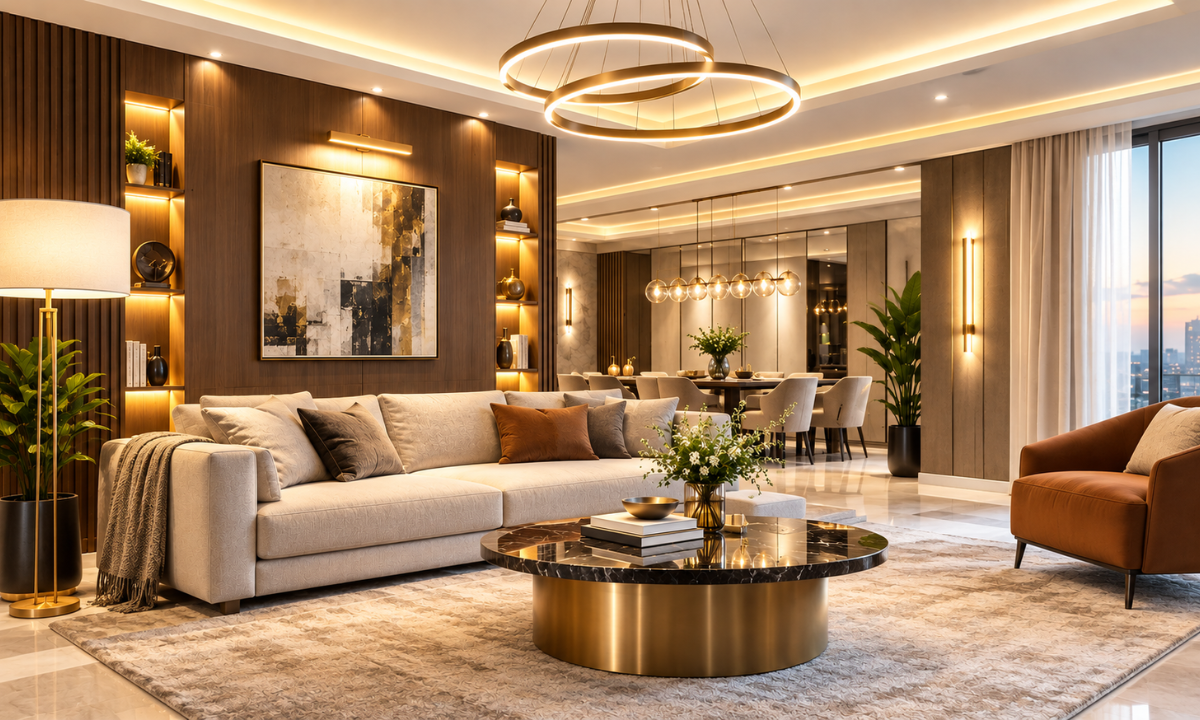
Luxury Lighting Design Guide: Creating Warm, Elegant and Sophisticated Homes
Lighting is one of the easiest things to underestimate when designing a luxury home.
You can have beautiful marble, premium woodwork, expensive furniture, and carefully selected décor, but if the lighting is too harsh or poorly positioned, the entire interior can lose its appeal.
Good lighting does something different. It makes the materials look better, creates depth, highlights important details, and changes the mood of a room throughout the day.
That is why luxury lighting design should be considered from the beginning of an interior project rather than added after the furniture and ceiling are finished.
For a high-end home, lighting is not just about making a room bright. It is about creating the right atmosphere for different moments.
What Is Luxury Lighting Design?
Luxury lighting design is the careful planning of artificial and natural light to support the architecture, interiors, furniture, and lifestyle of a home.
It can include:
- Ambient lighting
- Accent lighting
- Decorative lighting
- Cove lighting
- Recessed lighting
- Wall lighting
- Pendant lights
- Chandeliers
- Floor lamps
- Under-cabinet lighting
- Wardrobe lighting
- Backlighting
- Smart lighting systems
The best results usually come from combining several types of lighting rather than depending on one central fixture.
Why Lighting Is Important in Luxury Interiors
Lighting can change how you perceive almost every material in a home.
A marble surface can look dramatic under directional light.
Wood can appear warmer under soft illumination.
Metal can become a subtle highlight.
Artwork can become a focal point.
A textured wall can gain depth.
This means lighting needs to be planned alongside the materials rather than separately.
The Three Layers of Luxury Lighting
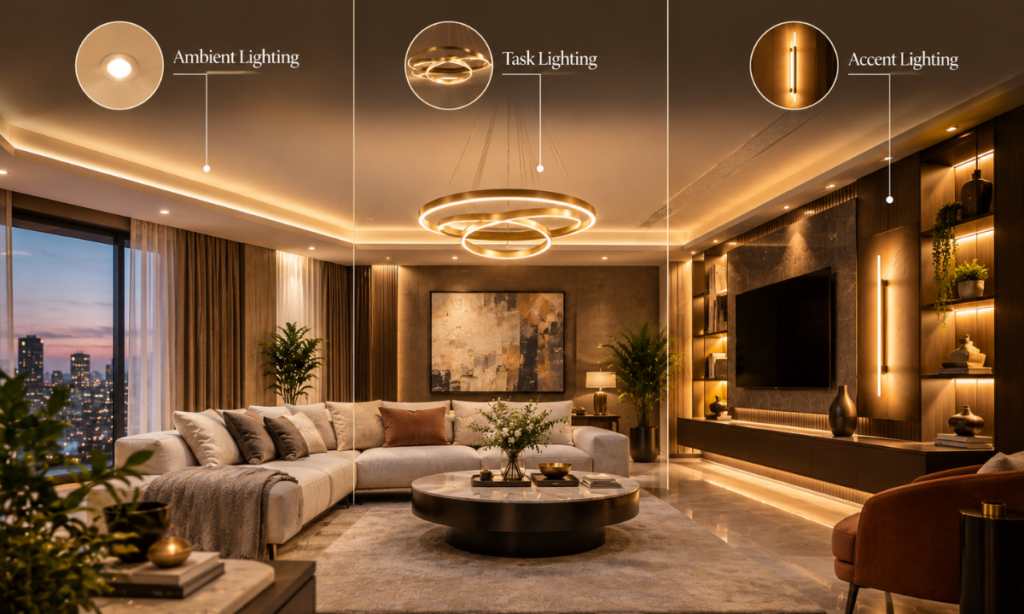
A well-designed home generally needs different layers of light.
1. Ambient Lighting
Ambient lighting provides the general illumination of the room.
Examples include:
- Recessed ceiling lights
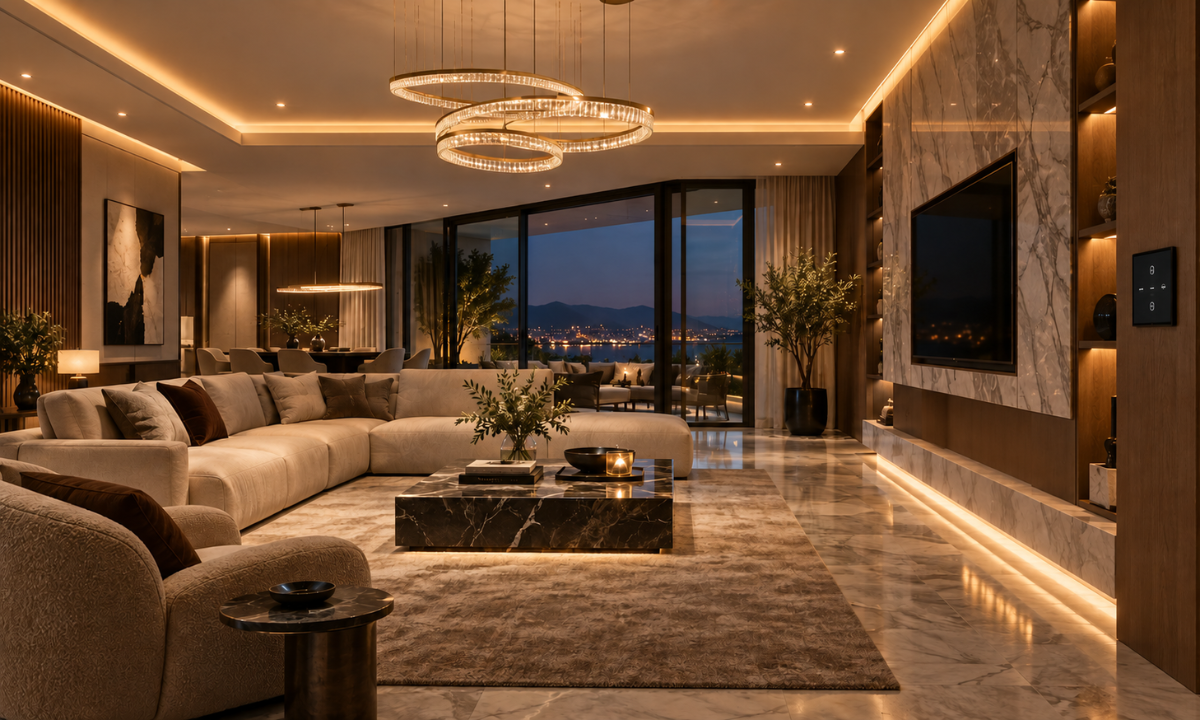
- Cove lighting
- Soft ceiling illumination
- Indirect lighting
It should make the room comfortable without creating harsh shadows.
2. Accent Lighting
Accent lighting draws attention to specific features.
It can highlight:
- Artwork
- Marble walls
- Sculptures
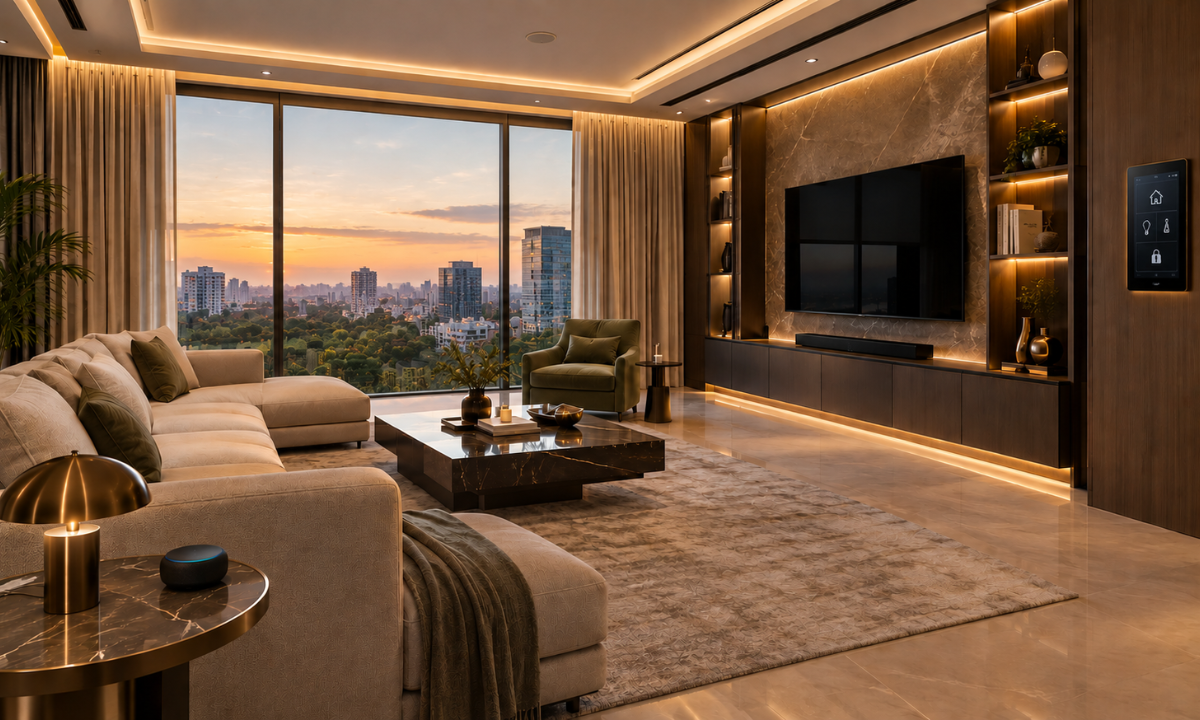
- Display shelves
- Architectural details
- Textured walls
Accent lighting gives a room depth.
3. Decorative Lighting
Decorative lighting also acts as part of the interior design.
Examples include:
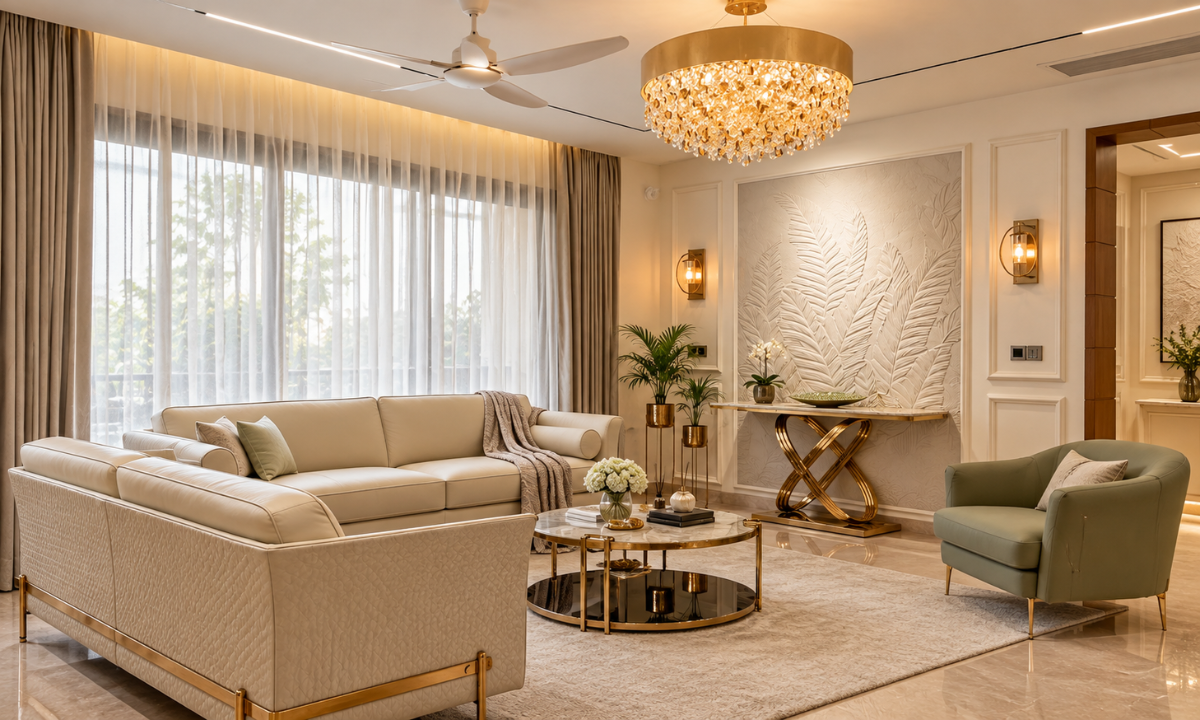
- Chandeliers
- Pendant lights
- Sculptural fixtures
- Decorative wall lights
- Designer table lamps
These fixtures can become visual features even when they are switched off.
Luxury Cove Lighting
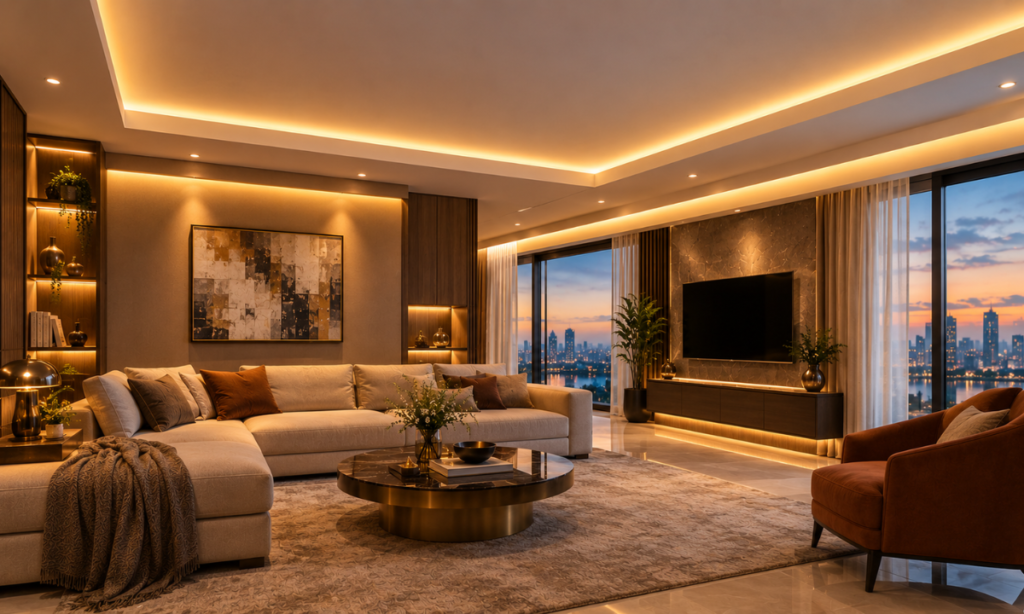
Cove lighting is one of the most effective ways to create a soft luxury atmosphere.
The light source is concealed within a recessed ceiling detail, allowing light to bounce indirectly into the room.
It can work beautifully in:
- Living rooms
- Bedrooms
- Dining rooms
- Corridors
- Lounges
The effect should be subtle.
If the cove is too bright, it can become a distraction rather than an atmospheric element.
Recessed Lighting
Recessed lights can provide clean and controlled illumination.
They are particularly useful when you want the architecture and furniture to remain the focus.
Instead of filling the ceiling with numerous lights, position them according to:
- Furniture
- Walking paths
- Artwork
- Storage
- Architectural features
A few well-positioned lights are often better than a large number of randomly placed fixtures.
Luxury Chandeliers
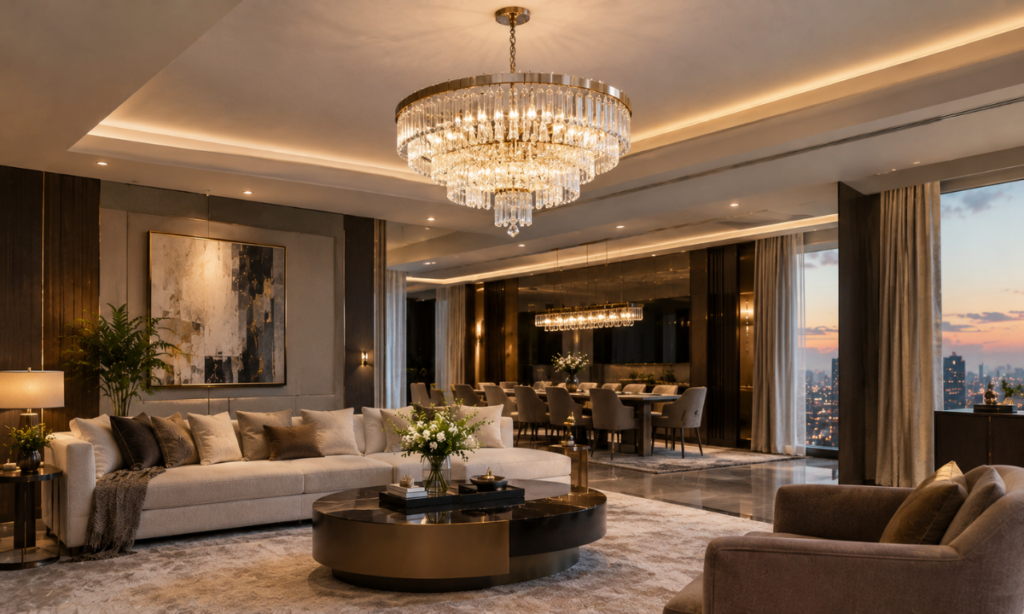
A chandelier can become the centrepiece of a room.
It can be used in:
- Entrance foyers
- Double-height living rooms
- Dining rooms
- Staircases
- Master bedrooms
The size should match the scale of the space.
A chandelier that is too small can disappear in a large room.
One that is too large can overwhelm the furniture and architecture.
The design should also complement the overall interior style.
Pendant Lighting
Pendant lights can provide both functional and decorative illumination.
They work particularly well above:
- Dining tables
- Kitchen islands
- Breakfast counters
- Bedside areas
- Consoles
In luxury interiors, a series of simple pendants can sometimes look more sophisticated than one oversized decorative fixture.
Wall Lighting
Wall lights can provide softer illumination and reduce dependence on ceiling lighting.
They can be used to:
- Highlight artwork
- Frame a bed
- Illuminate corridors
- Create mood lighting
- Highlight textured walls
Wall lights can also add symmetry to bedrooms, bathrooms, and formal areas.
Lighting for Luxury Living Rooms
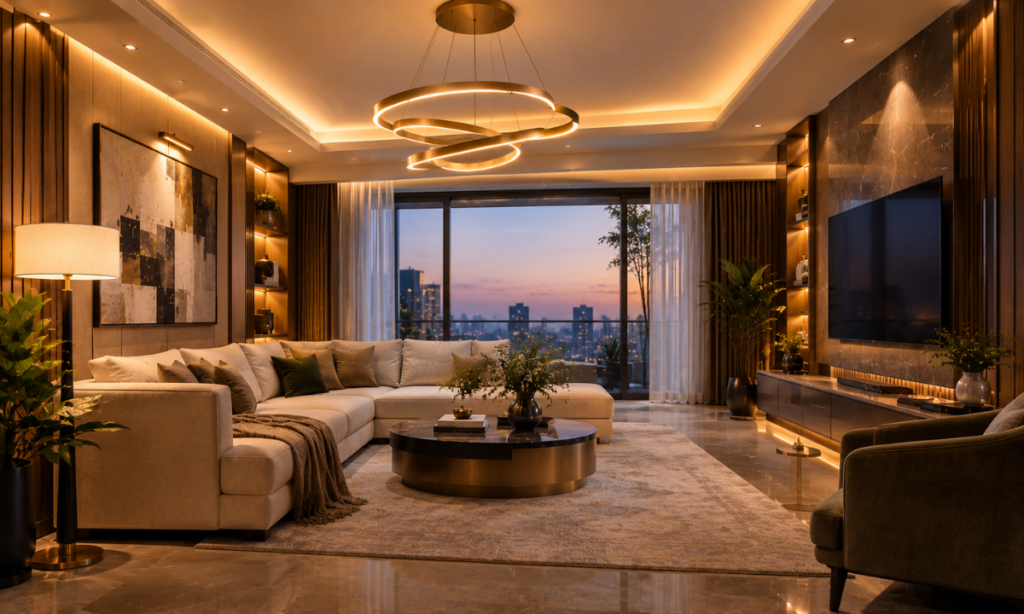
The living room usually needs several lighting layers.
A good combination can include:
Ambient lighting + accent lighting + decorative lighting
For example:
- Recessed ceiling lights for general illumination
- Wall washers for artwork or stone
- Floor lamps near seating
- A decorative chandelier or pendant
This allows the room to change depending on the occasion.
You may want brighter light when entertaining and softer illumination when relaxing in the evening.
Luxury Bedroom Lighting
Bedrooms need a softer approach.
Instead of relying on bright overhead lighting, combine:
- Bedside lamps
- Cove lighting
- Wall lights
- Recessed lights
- Wardrobe lighting
Dimmable lighting is particularly useful.
The lighting should help the room transition from daytime activity to a calm evening environment.
Luxury Kitchen Lighting
The kitchen needs functional lighting as well as atmosphere.
Different areas may require different illumination.
Work Areas
Countertops and preparation areas need good task lighting.
Island
Pendant lights can provide both task lighting and a decorative element.
Cabinets
Under-cabinet lighting can illuminate work surfaces.
Display Areas
Interior cabinet lighting can highlight selected objects.
The lighting should be planned around how the kitchen is actually used.
Luxury Dining Room Lighting
The dining table should usually be the visual centre of the room.
A chandelier or pendant above the table can establish that focus.
Warm lighting is often suitable for dining because it creates a more comfortable atmosphere.
Wall lighting or subtle accent lighting can provide additional layers without competing with the table.
Luxury Bathroom Lighting
Bathroom lighting needs to be both attractive and functional.
The mirror area deserves particular attention.
Good options include:
- Backlit mirrors
- Vertical wall lights
- Recessed ceiling lights
- Shower lighting
- Vanity lighting
Avoid placing a single bright light directly above the mirror if it creates strong shadows on the face.
Appropriate fittings and electrical specifications are especially important in wet areas.
Luxury Kitchen Cabinet Lighting
Cabinet lighting can make a kitchen feel significantly more sophisticated.
Options include:
- Under-cabinet LED strips
- Internal cabinet lighting
- Toe-kick lighting
- Shelf lighting
- Display cabinet lighting
The light source should ideally be concealed.
The objective is to illuminate the material or object rather than expose the LED itself.
Wardrobe and Dressing Room Lighting
Lighting can transform a wardrobe into a more comfortable and functional space.
Consider:
- Vertical LED lighting
- Internal wardrobe lights
- Shelf lighting
- Drawer lighting
- Ceiling illumination
Motion sensors can also be useful because they automatically activate the light when a wardrobe door is opened.
Lighting for Home Offices
A home office needs enough light for reading and working without creating glare.
It can combine:
- Natural daylight
- Desk lighting
- Recessed ceiling lights
- Shelf lighting
- Accent lighting
The position of the desk, windows, screens, and lighting should be considered together.
Luxury Staircase Lighting
Staircases provide excellent opportunities for architectural lighting.
You can use:
- Step lights
- Handrail lighting
- Wall washers
- Pendant lights
- Cove lighting
In a double-height staircase, a statement pendant or chandelier can become an important architectural element.
Lighting for Double-Height Spaces
Large spaces require careful scale.
A small ceiling fixture can disappear in a double-height living room.
Options include:
- Large chandeliers
- Suspended sculptural lights
- Multiple pendant fixtures
- Wall washing
- Architectural uplighting
The goal is to create balance between the height of the space and the scale of the lighting.
Lighting and Luxury Materials
Lighting should be designed around the materials used in the interior.
Marble
Directional lighting can reveal natural veining and texture.
Wood
Warm lighting can emphasise the natural grain.
Glass
Backlighting and concealed illumination can create depth.
Metal
Accent lighting can highlight subtle reflections.
Fabric
Soft lighting can enhance texture without creating harsh shadows.
This is why material selection and lighting design should happen together.
Warm vs Cool Lighting
Colour temperature has a major influence on atmosphere.
Warm Light
Warm light generally creates a softer and more comfortable environment.
It works well in:
- Bedrooms
- Living rooms
- Dining rooms
- Lounges
Neutral Light
Neutral lighting can work well in:
- Kitchens
- Bathrooms
- Offices
- Dressing rooms
The exact colour temperature should be selected based on the material palette and activity.
A luxury home does not necessarily need the same colour temperature everywhere.
Smart Lighting for Luxury Homes
Smart lighting can make a luxury home more comfortable and flexible.
Lighting scenes can be created for:
- Morning
- Evening
- Entertaining
- Dinner
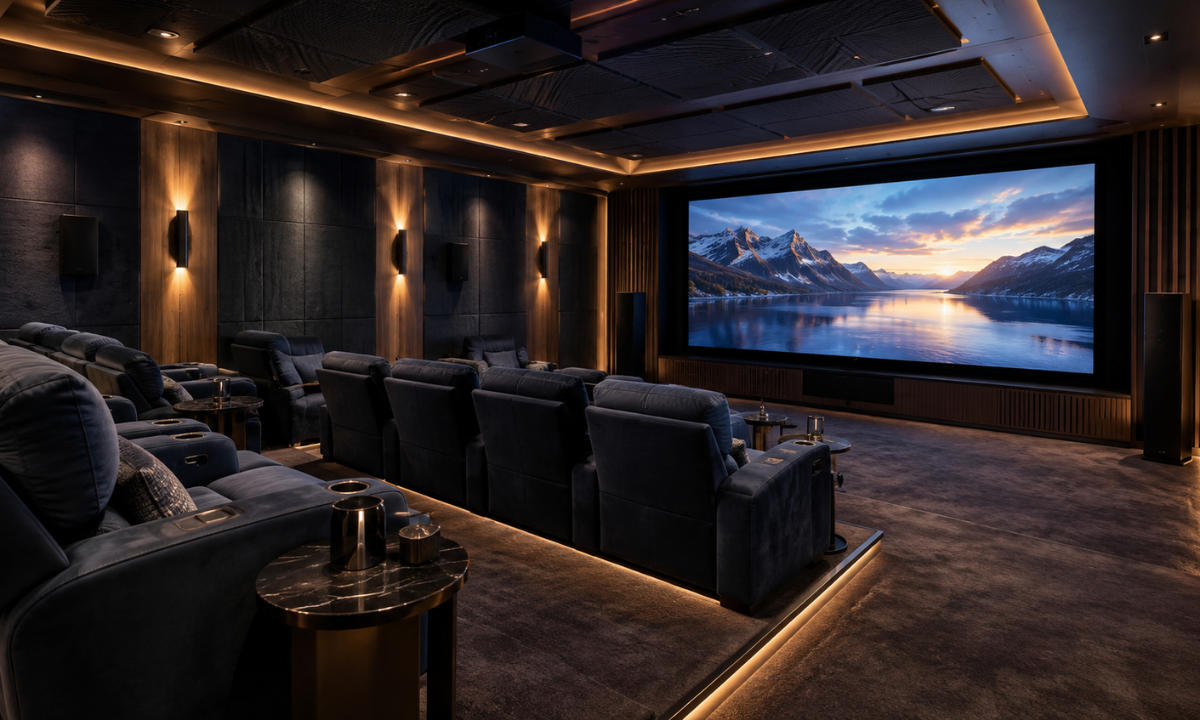
- Movie night
- Reading
- Relaxing
Lights can be controlled through:
- Wall panels
- Mobile devices
- Voice systems
- Home automation systems
- Sensors
The important part is that the technology remains easy to use.
Smart lighting should improve the experience rather than make simple controls complicated.
Lighting for Quiet Luxury
Quiet luxury is about subtlety.
Instead of making every light fixture a statement piece, use lighting to highlight the architecture.
This can mean:
- Concealed cove lighting
- Soft wall washing
- Minimal pendants
- Warm floor lamps
- Integrated cabinet lighting
The light becomes part of the atmosphere rather than the centre of attention.
Lighting for Different Interior Styles
Modern Luxury
Use recessed lighting, linear profiles, concealed LED strips, and sculptural pendants.
Contemporary Luxury
Combine architectural lighting with decorative fixtures and accent illumination.
Minimalist Luxury
Keep the fixtures simple and let the architecture and materials provide the visual interest.
Classic Luxury
Chandeliers, wall sconces, decorative lamps, and layered lighting can work beautifully.
Art Deco Luxury
Statement fixtures, warm metals, glass, and dramatic contrasts can create a sophisticated look.
Modern Indian Luxury
Warm lighting combined with brass, bronze, wood, stone, and handcrafted details can create a welcoming atmosphere.
How Much Does Luxury Lighting Design Cost?
The cost varies depending on:
- Number of fixtures
- Fixture quality
- Custom lighting
- Chandeliers
- LED systems
- Smart controls
- Dimming systems
- Electrical work
- Installation
- Architectural lighting
- Automation
A basic recessed lighting system will obviously cost much less than a fully integrated smart lighting system with custom fixtures and architectural illumination.
For a luxury residence, it is better to consider the complete lighting system rather than the price of individual fixtures.
Common Luxury Lighting Mistakes
Using Too Many Lights
More lights do not automatically mean better lighting.
Making Every Fixture Decorative
Not every light needs to be a statement piece.
Ignoring Dimmers
Dimming allows one room to work for different situations.
Choosing the Wrong Colour Temperature
Cool lighting can make warm materials feel harsh.
Forgetting Task Lighting
Decorative lighting cannot replace functional lighting where you need to work.
Poorly Placed Spotlights
Spotlights should be positioned according to furniture, artwork, and architecture.
Designing Lighting After the Ceiling
Electrical and lighting requirements should be planned before the ceiling is completed.
Luxury Lighting Design for Gurgaon Homes
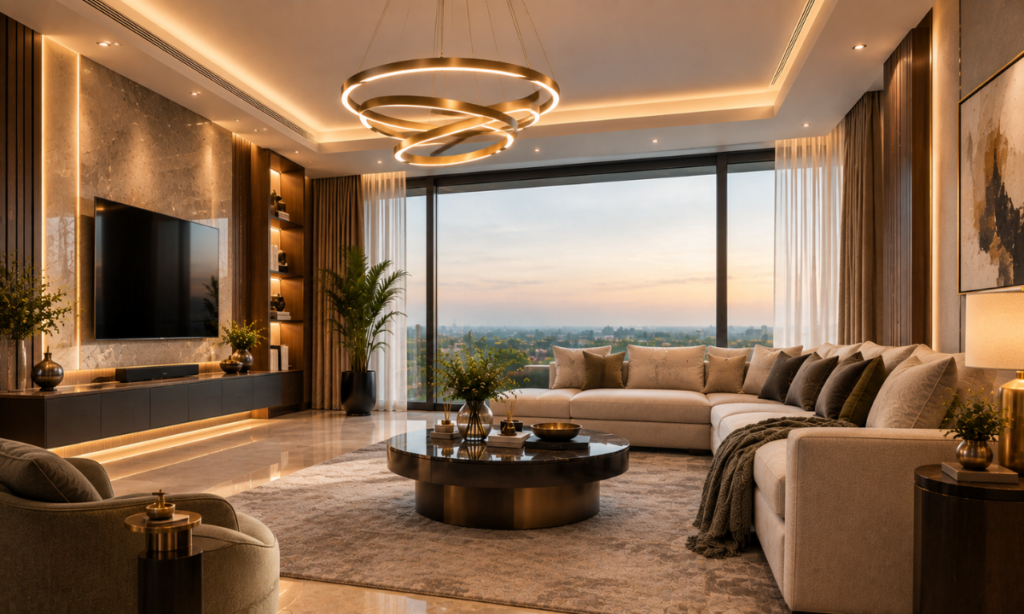
Gurgaon’s premium homes range from apartments and penthouses to large villas and private residences.
Each property can require a different lighting strategy.
Luxury Apartments
Use layered lighting to create depth without overcrowding the ceiling.
Penthouses
Large spaces can accommodate statement chandeliers, architectural lighting, and dramatic accent illumination.
Villas
Villas can incorporate lighting across double-height spaces, staircases, landscaped areas, home theatres, bars, and private lounges.
The lighting should always respond to the architecture and how the family uses the home.
The AEK Ultra Luxury Interior Designer Approach
The AEK Ultra Luxury Interior Designer approach considers lighting as part of the architecture rather than an element added at the end.
Lighting can be planned alongside:
- Italian marble
- Premium veneer
- Luxury wall panels
- Metal finishes
- Glass
- Furniture
- False ceilings
- Home automation
The aim is to make every light serve a purpose.
A wall washer may highlight a stone wall. A concealed LED strip may emphasise a timber detail. A pendant may define the dining table. A soft bedside light may make the bedroom more comfortable.
When these elements are planned together, the lighting becomes almost invisible while the room itself looks better.
That is often the sign of good luxury lighting design.
Final Thoughts
Luxury lighting is not about making a home brighter.
It is about making the home feel better.
The right lighting can bring out the natural movement of marble, highlight the grain of premium wood, soften a bedroom, make a dining room feel intimate, and give a double-height living room the right sense of scale.
A successful lighting plan combines ambient, accent, task, and decorative lighting while giving homeowners the flexibility to adjust the atmosphere.
For a luxury residence in Gurgaon, lighting should be planned from the early stages of the interior design process.
When architecture, materials, furniture, ceiling design, and lighting are considered together, the result feels more natural and refined.
The AEK Ultra Luxury Interior Designer approach brings these elements together to create lighting schemes that are comfortable, functional, elegant, and carefully integrated into the overall interior.
Frequently Asked Questions
What is luxury lighting design?
Luxury lighting design is the planned use of ambient, accent, task, decorative, and architectural lighting to improve the appearance, functionality, and atmosphere of a home.
What type of lighting is best for luxury interiors?
A combination of lighting types usually works best. Recessed lighting, cove lighting, wall lighting, decorative fixtures, and accent lighting can work together to create depth.
Is warm lighting better for luxury homes?
Warm lighting often works well in living rooms, bedrooms, dining rooms, and lounges because it creates a comfortable atmosphere. Neutral lighting can be more suitable for kitchens, offices, and some bathrooms.
Should luxury homes use smart lighting?
Smart lighting can be useful for creating different lighting scenes and controlling lights more conveniently. It should be planned around the homeowner’s lifestyle.
How much does luxury lighting design cost?
The cost depends on fixtures, architectural lighting, electrical work, dimming, smart controls, custom lighting, and installation.
Can lighting highlight marble and wood?
Yes. Directional lighting can highlight marble veining, while warm integrated lighting can bring out the natural grain of wood.
Why are dimmers important in luxury interiors?
Dimmers allow lighting intensity to be adjusted according to the time of day and activity, making the same space more flexible.
Why choose The AEK for luxury lighting design?
The AEK Ultra Luxury Interior Designer approach integrates lighting with architecture, materials, furniture, false ceilings, wall treatments, and home automation to create a cohesive and comfortable luxury interior.