
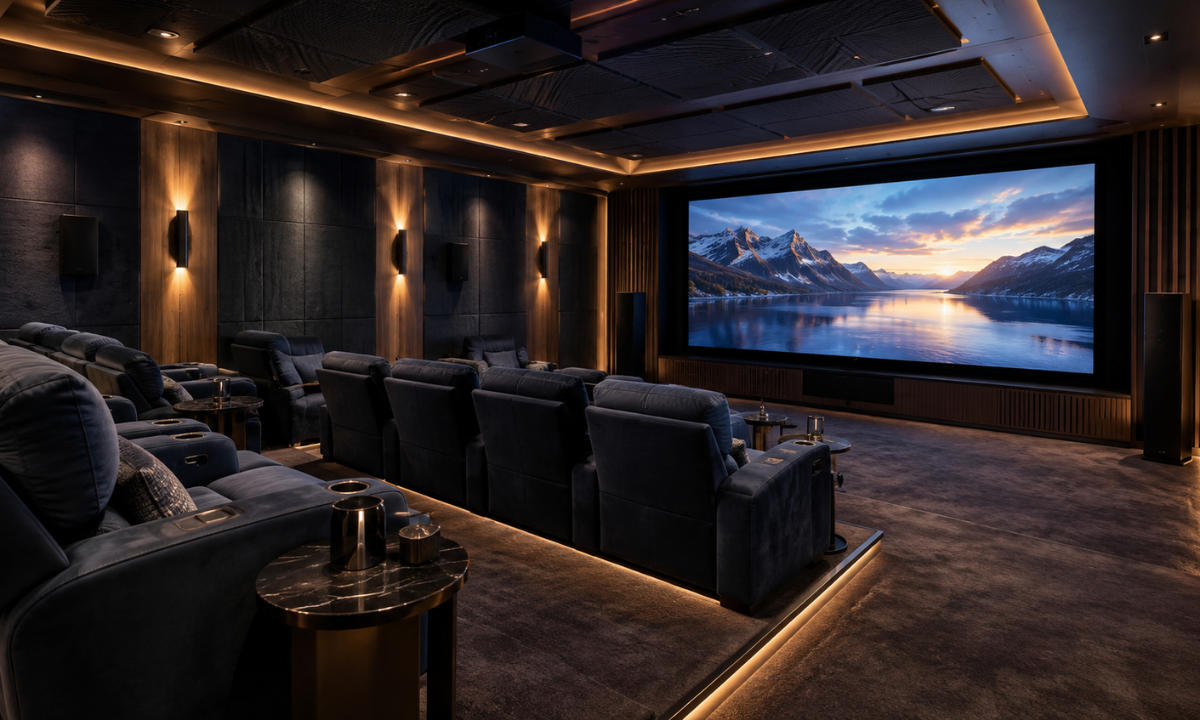
Luxury Home Theatre Design: Ideas for a Private Cinema at Home
A private home theatre can transform a luxury residence into a completely different kind of living experience.
It is not simply a room with a large television and comfortable seating. A well-designed home theatre combines architecture, acoustics, lighting, technology, furniture and materials to create an immersive entertainment environment.
For luxury homeowners, the goal is often to create a private cinema that feels sophisticated and comfortable while blending naturally with the rest of the residence.
From concealed speakers and acoustic wall treatments to tiered seating, atmospheric lighting and premium finishes, every detail can contribute to the experience.
At TheAEK, luxury home theatre design is approached as an integrated interior project. The technology needs to perform well, but the room should also feel like an intentional part of the home’s architecture.
What Is Luxury Home Theatre Design?
Luxury home theatre design involves planning a dedicated entertainment space around the requirements of cinema, music and relaxation.
A complete design can include:
- Large projection screens or high-end displays
- Projectors
- Surround-sound systems
- Acoustic treatments
- Reclining theatre seats
- Ambient lighting
- Automated curtains
- Control systems
- Custom wall panelling
- Acoustic ceilings
- Carpet or other suitable flooring
- Storage
- Concession areas
- Decorative elements
The difference between a basic media room and a luxury home theatre is the level of integration.
Instead of adding equipment to an existing room, the architecture can be designed around the entertainment experience.
Why Design Matters in a Home Theatre
Picture and sound quality are influenced by the room itself.
The size and shape of the room, wall surfaces, ceiling, seating position, lighting and acoustic treatment can all affect the experience.
A beautiful projector cannot compensate for a room with poor acoustics.
Likewise, expensive speakers may not perform as intended if they are placed without considering the room layout.
This is why home theatre design should begin with the space rather than with individual products.
1. Choose the Right Room
The first step is identifying an appropriate location.
Possible areas include:
- Dedicated basement theatres
- Large spare rooms
- Entertainment rooms
- Converted bedrooms
- Private lounges
- Large family rooms
The room should have enough space for comfortable seating, screen placement, speaker positioning and circulation.
For a dedicated cinema, controlling external light and sound can also make the space more suitable.
2. Plan the Screen First
The screen is usually the visual centre of a home theatre.
Depending on the room and requirements, homeowners can consider:
- Large-format televisions
- Projector screens
- Fixed-frame screens
- Motorised screens
- Ultra-short-throw projection
The appropriate solution depends on room dimensions, ambient light, viewing distance and the desired cinematic experience.
The screen should be positioned so that viewers have comfortable sightlines from all seating positions.
3. Create Comfortable Theatre Seating
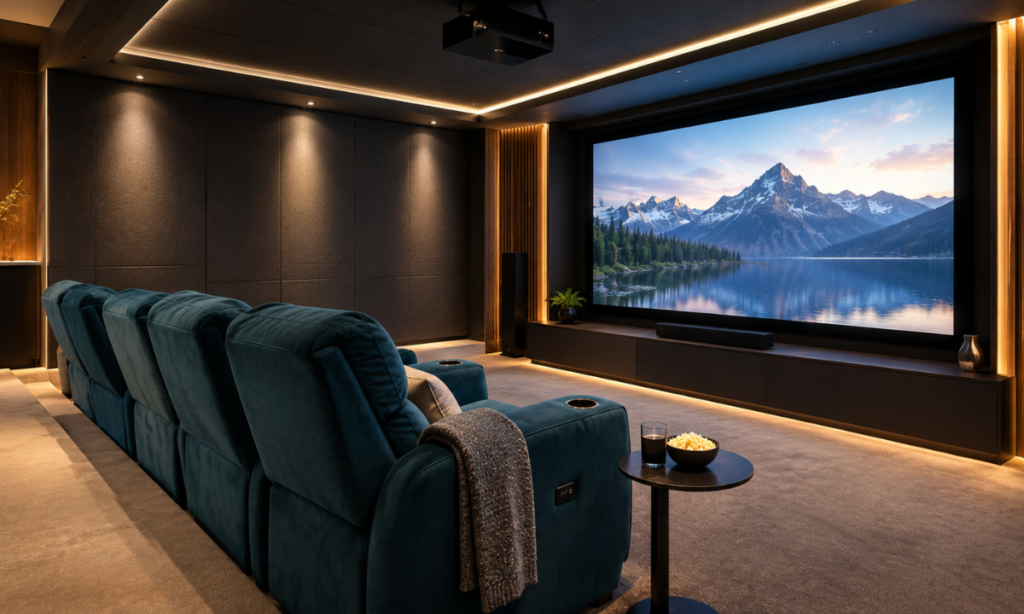
Luxury home theatre seating is about more than appearance.
Comfort becomes particularly important because viewers may spend several hours in the room.
Options include:
- Reclining theatre chairs
- Motorised recliners
- Custom upholstered seats
- Two-seat configurations
- Curved seating arrangements
- Tiered seating
Features can include:
- Power recline
- Headrest adjustment
- Armrests
- Cup holders
- USB charging
- Storage
- Adjustable lumbar support
The number of seats should be determined by the room rather than trying to maximise capacity.
Leaving adequate space between rows improves movement and comfort.
4. Tiered Seating for a Cinematic Experience
Tiered seating can improve sightlines when the room is large enough.
The back row is raised slightly above the front row, allowing viewers to see the screen without obstruction.
Tiered floors can also give the room a more authentic cinema character.
However, the construction should be carefully planned to accommodate:
- Seating
- Electrical requirements
- Floor finishes
- Acoustic considerations
- Safe movement
5. Acoustic Design Is Essential
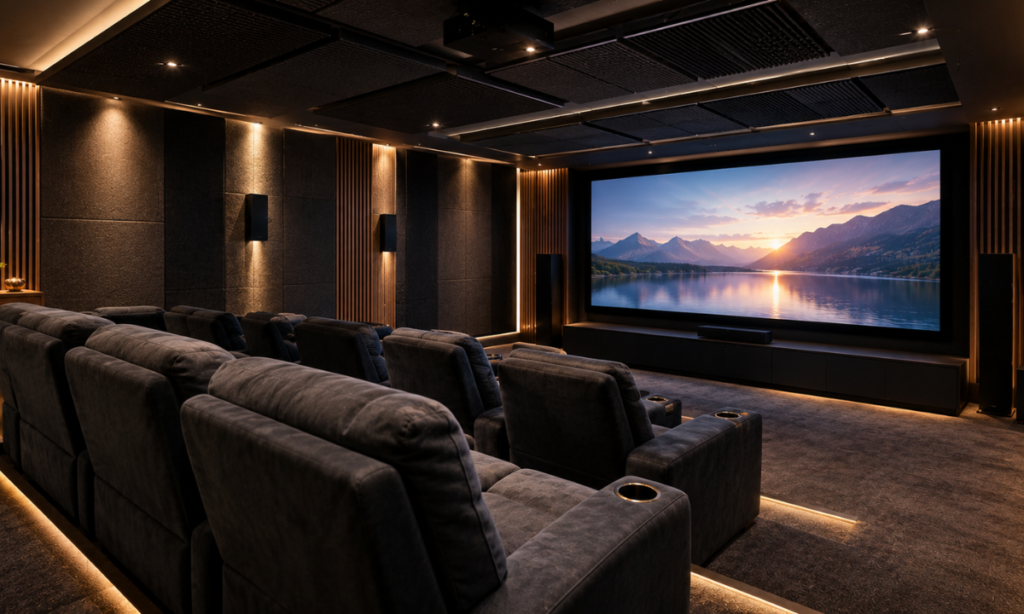
Acoustics are one of the most important aspects of a luxury home theatre.
Sound can reflect from hard surfaces and create unwanted echoes or distortion.
Acoustic treatment can help manage these reflections.
Possible solutions include:
- Acoustic wall panels
- Fabric-covered panels
- Acoustic ceilings
- Bass traps
- Absorption panels
- Diffusers
- Heavy curtains
- Carpet
The objective is not necessarily to make the room completely silent.
The goal is to create a controlled acoustic environment where dialogue, music and effects can be experienced clearly.
6. Acoustic Wall Panels
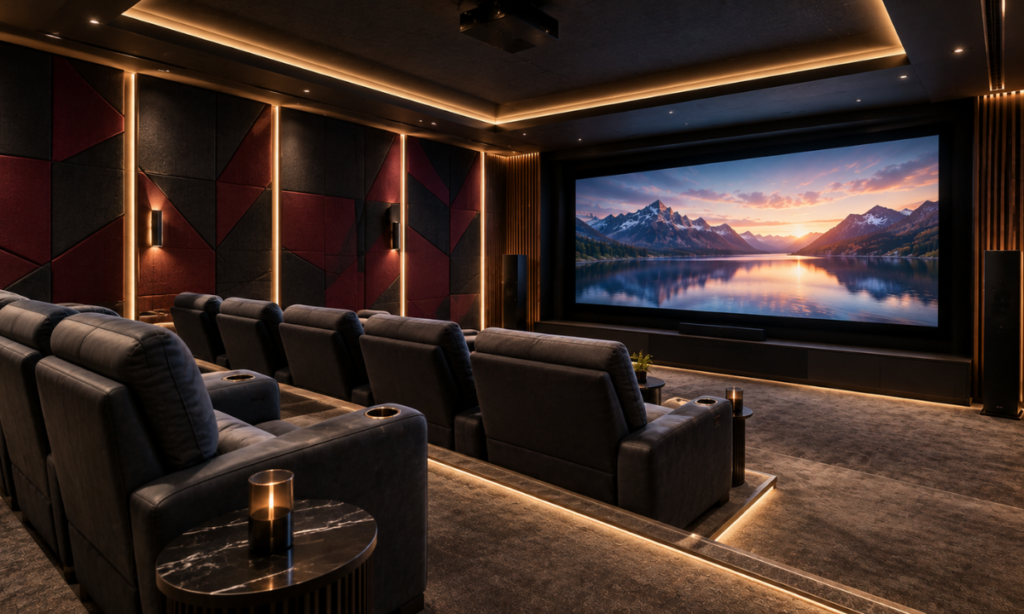
Acoustic panels can serve both a functional and aesthetic purpose.
Instead of using exposed technical panels, they can be integrated into the interior design.
For example, fabric-covered acoustic panels can be incorporated into decorative wall sections.
The colour and texture can be coordinated with:
- Seating
- Carpet
- Curtains
- Ceiling
- Wall finishes
This allows the acoustic treatment to become part of the design.
7. Concealed Speakers
Visible speakers are not always desirable in a luxury interior.
Where appropriate, speakers can be concealed within:
- Walls
- Ceilings
- Custom cabinetry
- Acoustic panels
This creates a cleaner visual environment.
The room can then focus visually on the screen, seating and architectural elements rather than exposed technology.
Speaker placement should still be determined by the audio design rather than purely by aesthetics.
8. Surround Sound Design
A home theatre can use multiple speakers positioned around the room to create a more immersive sound field.
Depending on the system, this can include:
- Front speakers
- Centre speaker
- Surround speakers
- Rear speakers
- Subwoofers
- Height speakers
The exact configuration should be based on the room, equipment and listening position.
A properly calibrated system can create a more consistent experience across the seating area.
9. Lighting for Luxury Home Theatres
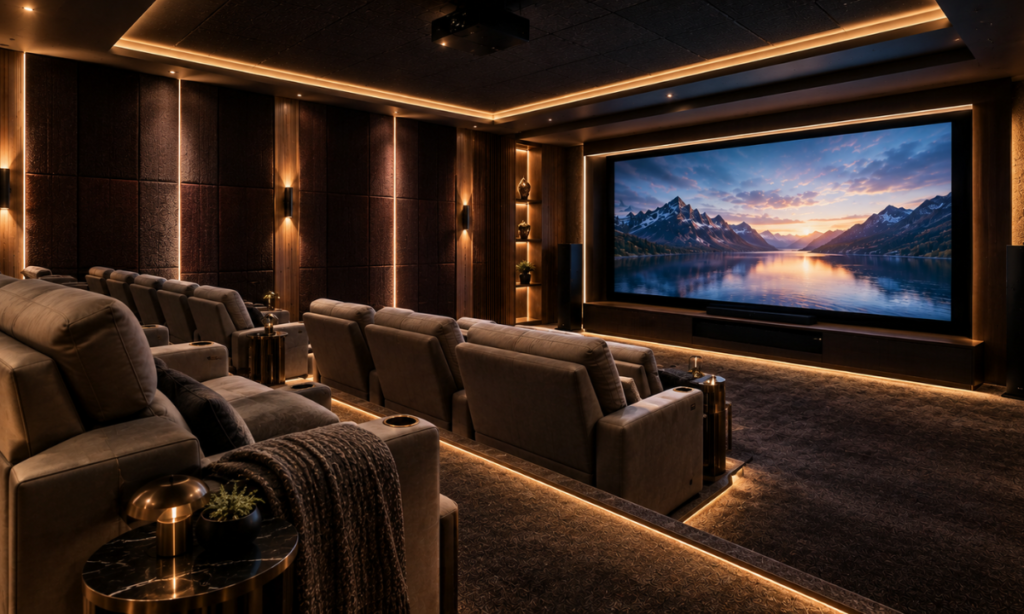
Lighting has a major impact on the atmosphere of a home theatre.
The room should provide enough light for safe movement while avoiding unnecessary glare on the screen.
Possible lighting elements include:
- Cove lighting
- Recessed lights
- Step lights
- Wall sconces
- LED strips
- Floor-level lighting
- Decorative lighting
Different lighting scenes can be created for different activities.
Movie Mode
Main lighting dims while pathway lighting remains active.
Entry Mode
Lighting increases to help people enter and find their seats.
Intermission Mode
Ambient lighting rises slightly.
Cleaning Mode
The room switches to brighter general lighting.
TheAEK’s Luxury Home Lighting Automation guide explores how automated lighting can create different scenes within luxury residential spaces.
10. Smart Automation for Home Theatres
Automation can make a private cinema much easier to operate.
A single command could potentially:
- Close the curtains
- Dim the lights
- Turn on the projector
- Lower the screen
- Activate the sound system
- Set the preferred room environment
A “Movie Night” scene can therefore transform the room with one command.
For broader automation ideas, see TheAEK’s Smart Home Automation for Luxury Interiors.
11. Motorised Curtains and Blackout Systems
Natural light can affect the viewing experience.
Motorised blackout curtains can help control daylight and create a darker environment.
They can also contribute to the visual character of the room.
Heavy fabrics can provide:
- Light control
- Acoustic benefits
- A luxurious appearance
- Improved privacy
Curtains can be integrated with the theatre’s automation system so they close automatically when a movie begins.
12. Luxury Home Theatre Wall Design
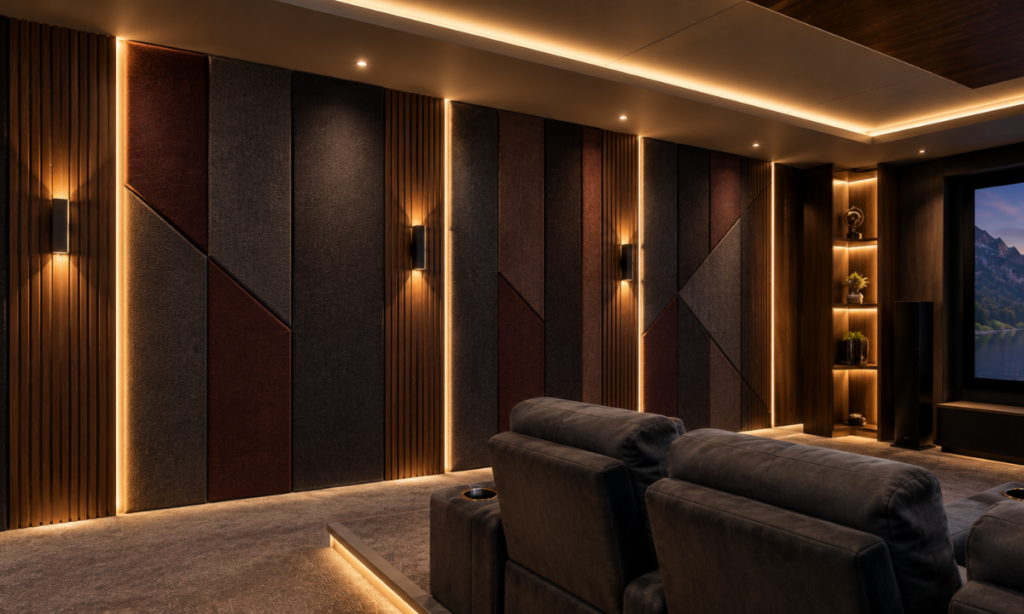
The walls of a home theatre provide an opportunity to combine acoustics with visual design.
Possible treatments include:
- Fabric panels
- Veneer
- Dark wood
- Acoustic panelling
- Decorative moulding
- Textured finishes
- Stone accents
However, reflective materials should be used carefully around the screen and speaker areas.
The design should support both the acoustic requirements and the visual atmosphere.
TheAEK’s Premium Veneer Interior Design Guide provides ideas for incorporating natural wood textures into luxury interiors.
13. Dark Colour Schemes
Dark colours are commonly associated with cinema environments because they can help create a more immersive atmosphere.
Suitable tones can include:
- Charcoal
- Deep brown
- Dark grey
- Navy
- Deep green
- Black
The exact palette should depend on the room’s architecture and the homeowner’s preferences.
Dark colours can also make accent lighting and illuminated architectural details more prominent.
14. Luxury Ceiling Design
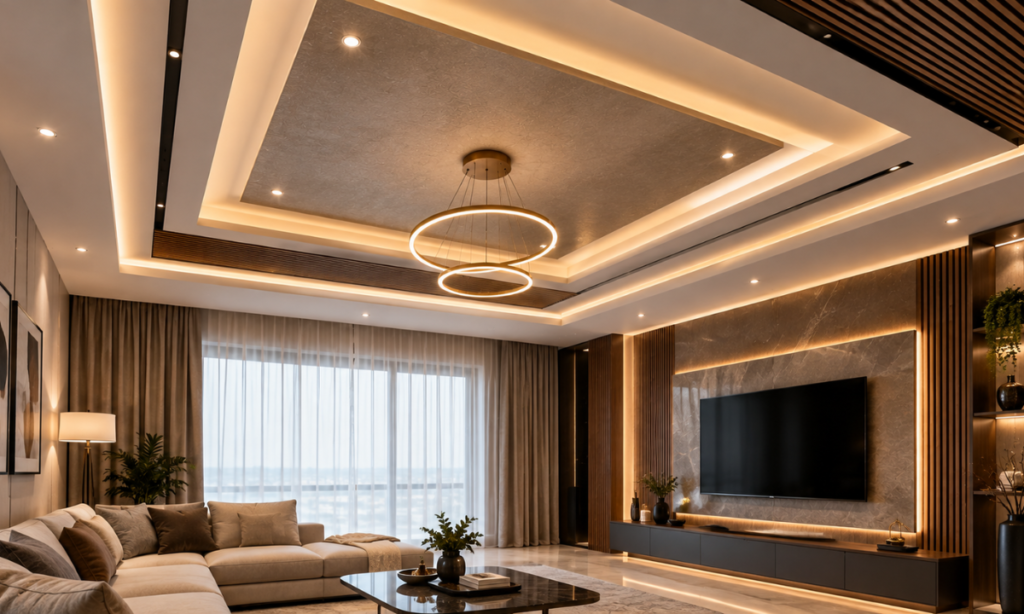
The ceiling is often overlooked in home theatre design.
However, it can provide opportunities for:
- Acoustic treatment
- Concealed lighting
- Speaker integration
- Decorative detailing
- Star-effect lighting
- Projector installation
A carefully designed ceiling can make the room feel more immersive while hiding technical elements.
TheAEK’s Luxury False Ceiling Design Guide provides additional ideas for integrating lighting and architectural detailing into luxury ceilings.
15. Star Ceiling for a Private Cinema
A star-effect ceiling can create a dramatic atmosphere.
Small points of light can be integrated into a dark ceiling to create the appearance of a night sky.
This feature is particularly suitable for:
- Private cinemas
- Entertainment rooms
- Luxury lounges
The effect should be subtle.
Too many bright points can distract from the screen.
16. Premium Flooring for Home Theatres
Flooring contributes to both comfort and acoustics.
Carpet is a common choice because it can help reduce sound reflections while providing a comfortable surface.
Other options can also be considered depending on the acoustic design.
The flooring should coordinate with the seating, wall treatment and overall colour palette.
17. Luxury Home Theatre Bar or Concession Area
For larger entertainment rooms, a small refreshment area can make the experience more complete.
Possible additions include:
- Mini bar
- Beverage refrigerator
- Snack counter
- Custom cabinetry
- Display shelving
- Coffee station
The concession area does not need to be large.
Even a compact integrated counter can add functionality without taking attention away from the cinema.
18. Acoustic Doors and Sound Isolation
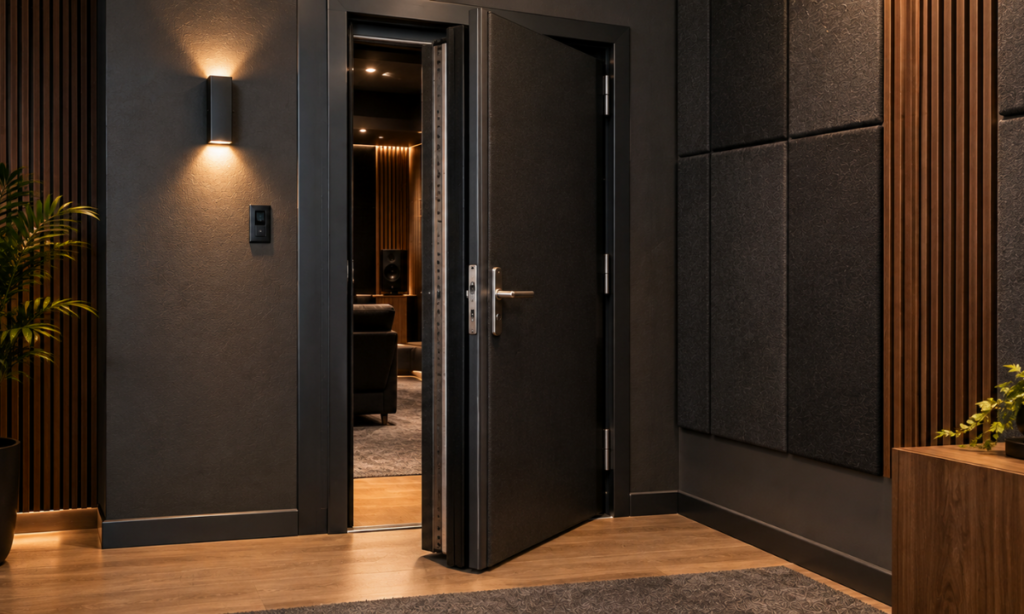
If the home theatre is located near bedrooms or living areas, sound isolation becomes an important consideration.
Depending on the construction, this can involve:
- Solid-core doors
- Sealed door frames
- Acoustic wall construction
- Insulated partitions
- Appropriate ceiling assemblies
- Floor isolation
Sound isolation and room acoustics are different considerations.
Acoustic treatment controls sound inside the room, while sound isolation helps limit sound transmission between spaces.
Both should be considered during planning.
19. Technology Storage and Equipment Rooms
Projectors, amplifiers, receivers and other equipment require appropriate locations.
Equipment can be housed in:
- Dedicated racks
- Ventilated cabinets
- Separate equipment rooms
- Concealed technical spaces
Ventilation is particularly important for electronic equipment.
A luxury theatre should not have equipment cluttering the viewing area.
20. Personalised Luxury Home Theatre Design
The most successful home theatres are designed around the homeowner rather than copied from a standard cinema.
One homeowner may want a traditional cinema aesthetic.
Another may prefer a contemporary dark interior.
Someone else may want a luxury lounge that can transform into a cinema.
The design can be personalised through:
- Seating
- Wall finishes
- Lighting
- Acoustic panels
- Flooring
- Ceiling design
- Decorative details
- Automation
- Artwork
At TheAEK, these elements can be considered together to create a private entertainment space that feels connected to the overall character of the residence.
Luxury Home Theatre Design Styles
Modern Cinema
Clean lines, dark finishes, concealed technology and minimalist seating.
Classic Cinema
Traditional detailing, rich fabrics, decorative wall panels and warm lighting.
Contemporary Luxury
Premium materials, architectural lighting and sophisticated furniture.
Private Lounge Theatre
A comfortable living-room atmosphere combined with high-quality cinema technology.
Minimalist Theatre
Simple materials, concealed equipment and minimal decorative elements.
The style should complement the rest of the home rather than feeling like an unrelated room.
Home Theatre Design Checklist
Before starting a luxury home theatre project, consider:
- Room dimensions
- Screen size
- Viewing distance
- Seating layout
- Speaker placement
- Acoustic treatment
- Sound isolation
- Lighting design
- Automation
- Curtain system
- Flooring
- Wall finishes
- Ceiling design
- Equipment location
- Ventilation
- Electrical requirements
- Storage
- Access and circulation
Planning these elements early helps avoid expensive changes later.
Common Luxury Home Theatre Design Mistakes
Focusing Only on the Screen
A large screen does not automatically create a good theatre. Acoustics, seating, lighting and room geometry also matter.
Ignoring Acoustics
A visually beautiful room can still perform poorly if sound reflections are not controlled.
Using Too Much Reflective Material
Excessive hard, reflective surfaces can create acoustic problems.
Making the Room Too Bright
Excessive lighting can reduce the cinematic atmosphere and create unwanted screen reflections.
Poor Seating Layout
Too many seats or insufficient spacing can make the room uncomfortable.
Leaving Technology Exposed
Visible cables and equipment can compromise the visual quality of a luxury interior.
Planning Technology Too Late
Projector locations, speaker wiring, acoustic construction and equipment spaces should be planned before finishing work begins.
Forgetting Ventilation
Projectors, amplifiers and other equipment can generate heat and require appropriate ventilation.
How TheAEK Approaches Luxury Home Theatre Design
At TheAEK, a home theatre is treated as an extension of the home’s overall interior architecture.
The design can coordinate:
- Screen technology
- Acoustic treatment
- Lighting
- Curtains
- Seating
- Wall finishes
- Ceiling design
- Premium materials
- Automation
- Storage
The aim is to make technology work quietly in the background while the room itself feels luxurious, comfortable and intentional.
For example, a dark veneer wall can provide warmth while integrating acoustic panels.
A carefully designed ceiling can conceal lighting and speakers.
Motorised curtains can control natural light.
Automated scenes can coordinate the entire room when a movie begins.
The result is a private cinema that feels designed rather than simply equipped.
Final Thoughts
A luxury home theatre is more than a screen, projector and a row of recliners.
It is a carefully coordinated environment where sound, picture, lighting, materials, seating and architecture work together.
The room should be comfortable when you are not watching a film and immersive when the cinema experience begins.
From concealed speakers and acoustic wall treatments to automated curtains, ambient lighting and personalised seating, every element can contribute to the final experience.
The most successful designs also understand restraint.
Not every wall needs to be dramatic. Not every technology needs to be visible. Not every feature needs to compete for attention.
Instead, the room should have a clear design direction.
At TheAEK, luxury home theatre design can be developed around the architecture, lifestyle and entertainment requirements of the homeowner, creating a private cinema that combines sophisticated interiors with carefully integrated technology.
Frequently Asked Questions
What is included in a luxury home theatre?
A luxury home theatre can include a large display or projector, surround sound, acoustic treatment, comfortable seating, lighting, curtains, automation, premium wall finishes, ceiling detailing and dedicated equipment storage.
How much space is needed for a home theatre?
There is no single ideal room size. The required space depends on the screen, seating capacity, viewing distance, speaker configuration and circulation requirements.
Is acoustic treatment necessary?
Acoustic treatment is important for controlling sound reflections and improving the listening experience. The appropriate treatment depends on the room and audio system.
Should home theatre walls be dark?
Dark walls are common because they can create an immersive atmosphere and reduce visual distraction. However, the colour palette should ultimately suit the overall design.
Can speakers be hidden?
Yes. Depending on the system and construction, speakers can be integrated into walls, ceilings or acoustic panels.
Can lighting be automated in a home theatre?
Yes. Lighting can be integrated into scenes such as Movie Mode, Entry Mode, Intermission Mode and Cleaning Mode.
Can curtains be automated?
Yes. Motorised blackout curtains can be integrated with the home theatre and programmed to close when a movie begins.
Can a home theatre also function as a lounge?
Yes. A flexible design can combine comfortable lounge furniture with cinema technology so the room can be used for multiple purposes.
What type of flooring is suitable for a home theatre?
Carpet is commonly considered because it can contribute to acoustic control and comfort. The final flooring should be selected according to the room’s acoustic and interior requirements.
Should home theatre technology be planned before the interiors?
Ideally, yes. Screen placement, speaker wiring, equipment locations, acoustic construction, lighting and automation should be considered before finishing materials are installed.
Does TheAEK design luxury home theatres?
TheAEK develops luxury residential interiors where entertainment spaces can be designed as part of the wider architectural and interior concept, combining technology, materials, lighting and customised detailing.