
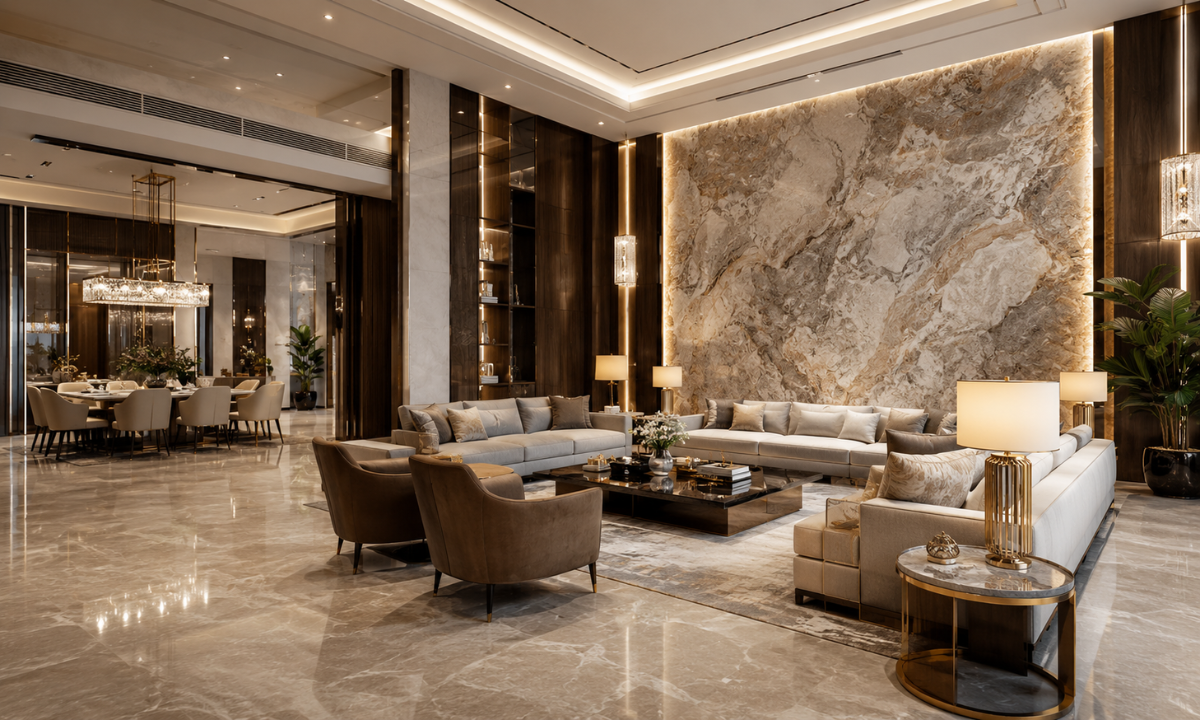
Luxury Stone Interior Design Guide: Creating Timeless and Sophisticated Homes
Luxury interiors are often remembered for the materials that shape them.
Furniture, lighting, artwork, and décor all contribute to the overall look, but natural stone can give a home a deeper architectural character. Its texture, colour, veining, and natural variation can transform an ordinary surface into an important part of the interior.
This is where luxury stone interior design becomes more than simply choosing an expensive material, especially when planning Ultra Luxury Interiors in Gurgaon.
The right stone can define an entrance, create a dramatic living room wall, add warmth to a bathroom, elevate a kitchen island, or bring a sense of permanence to a staircase.
For an ultra-luxury residence, the real difference comes from selecting the right stone and using it thoughtfully throughout the architecture.
What Is Luxury Stone Interior Design?
Luxury stone interior design involves using natural or premium engineered stone as an important part of the home’s architecture and interiors.
Stone can be incorporated into:
- Flooring
- Feature walls
- Entrance foyers
- Kitchen islands
- Countertops
- Bathrooms
- Staircases
- Fireplace surrounds
- Dining areas
- Home bars
- TV walls
- Vanity units
- Architectural partitions
The goal is not to cover every available surface with stone.
Instead, the material should be selected according to the room, lighting, architecture, and overall design concept.
Why Stone Works So Well in Luxury Interiors
Natural stone has qualities that are difficult to reproduce exactly with manufactured materials.
Every slab can have variations in:
- Colour
- Veining
- Texture
- Mineral patterns
- Tone
- Surface character
These differences give a luxury home an individual appearance.
Stone can also create a strong connection between different parts of a residence.
For example, the same limestone tone can appear in the entrance and living room, while a contrasting marble is introduced in the master bathroom.
This creates continuity without making every room identical.
Popular Stones for Luxury Home Interiors
Different stones create very different design moods.
Italian Marble
Italian marble is often chosen for its refined appearance and distinctive natural veining.
Popular varieties can include:
- Calacatta
- Statuario
- Carrara
- Botticino
It can be used for floors, walls, bathrooms, kitchen islands, staircases, and feature surfaces.
For a detailed look at Italian marble specifically, it should be treated as its own material category rather than simply grouped with other stones.
Travertine
Travertine has a warm and earthy appearance.
Its natural variation makes it suitable for homes where the design focuses on organic textures and understated luxury.
It works particularly well with:
- Natural wood
- Bronze
- Brass
- Neutral fabrics
- Soft lighting
Limestone
Limestone can create a softer architectural appearance than highly veined marble.
It is particularly suitable for interiors that favour calm, neutral palettes.
It can work well for:
- Flooring
- Wall cladding
- Bathrooms
- Fireplace surrounds
- Architectural details
Onyx
Onyx is known for its dramatic colour variation and translucency.
It can become a statement material when illuminated from behind.
Onyx can be used for:
- Bar counters
- Feature walls
- Reception areas
- Vanity units
- Dining features
- Decorative panels
Because of its visual intensity, it is usually more effective when used selectively.
Granite
Granite is known for its durability and can be suitable for applications that experience regular use.
It can be considered for:
- Kitchen countertops
- Islands
- Utility areas
- Flooring
- Outdoor-connected spaces
The right granite can also provide a sophisticated appearance without relying on highly dramatic veining.
Luxury Stone for Entrance Foyers
The entrance is one of the best places to introduce a statement stone.
A large-format floor or book-matched feature wall can immediately establish the design language of the home.
A luxury foyer might combine:
Natural stone + sculptural console + architectural lighting + refined metal detailing
The stone provides the foundation while the furniture and lighting complete the composition.
There is no need to add excessive décor when the material itself provides enough visual interest.
Luxury Stone Feature Walls
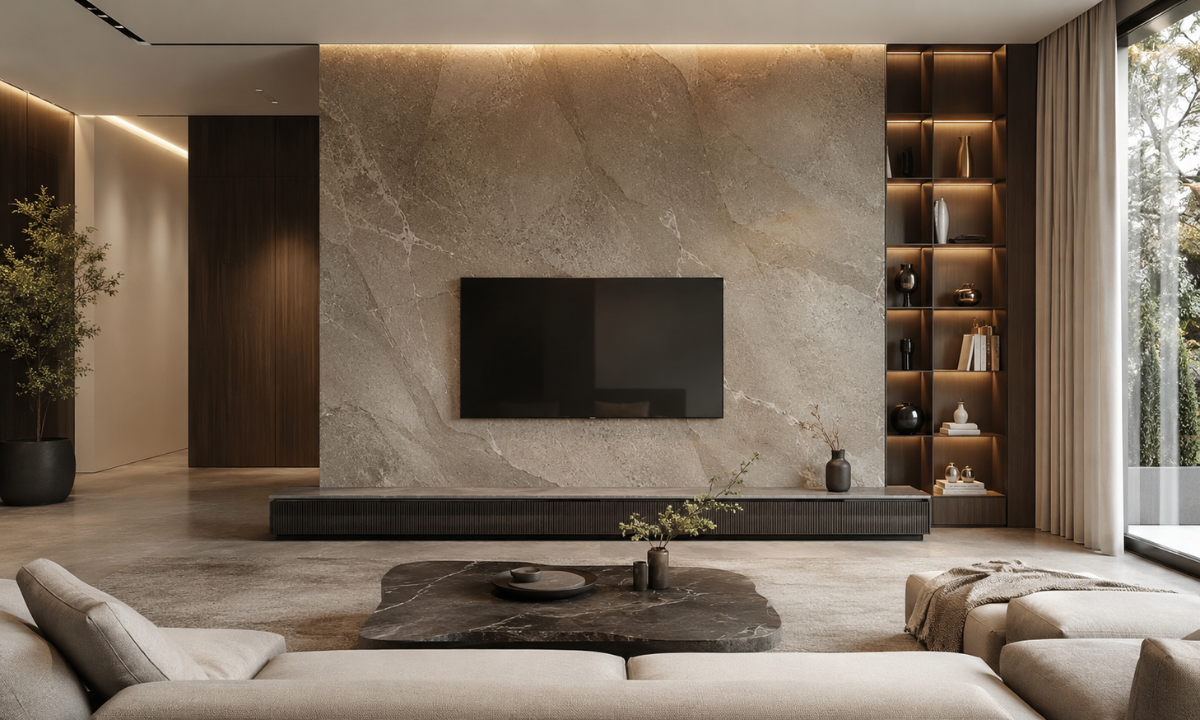
A feature wall is one of the most effective ways to use premium stone.
Instead of using stone throughout an entire room, select one important surface.
Potential locations include:
- Living room TV wall
- Dining room
- Entrance
- Master bedroom
- Home bar
- Private lounge
- Staircase wall
Large slabs can reduce visual interruptions and allow the natural pattern to become the main feature.
Book-Matched Stone Walls
Book-matching is particularly effective with stones that have strong natural movement.
Two slabs are positioned so the veins create a mirrored or continuous pattern.
The result can look almost like artwork.
It works particularly well with:
- Calacatta marble
- Dramatic marble
- Onyx
- Other highly veined stones
However, book-matching requires planning before fabrication.
The designer needs to understand the complete slab layout before deciding where each piece will be installed.
Luxury Stone Flooring
Stone flooring can create a strong foundation for the rest of the interior.
Large-format slabs can make a room feel visually continuous.
They can work particularly well in:
- Entrance foyers
- Living rooms
- Dining rooms
- Corridors
- Large bedrooms
But the largest possible slab is not automatically the best choice.
The slab dimensions, room proportions, joints, movement, and furniture layout all need to be considered.
Luxury Stone for Living Rooms
A luxury living room can use stone as an architectural focal point.
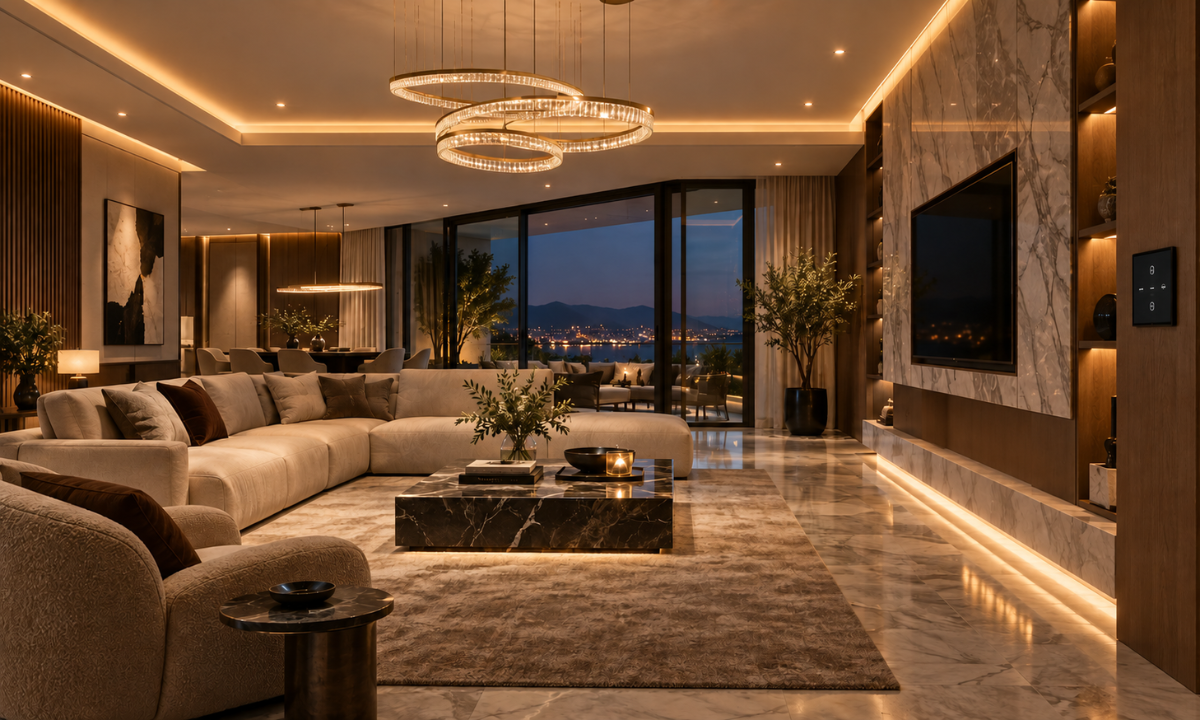
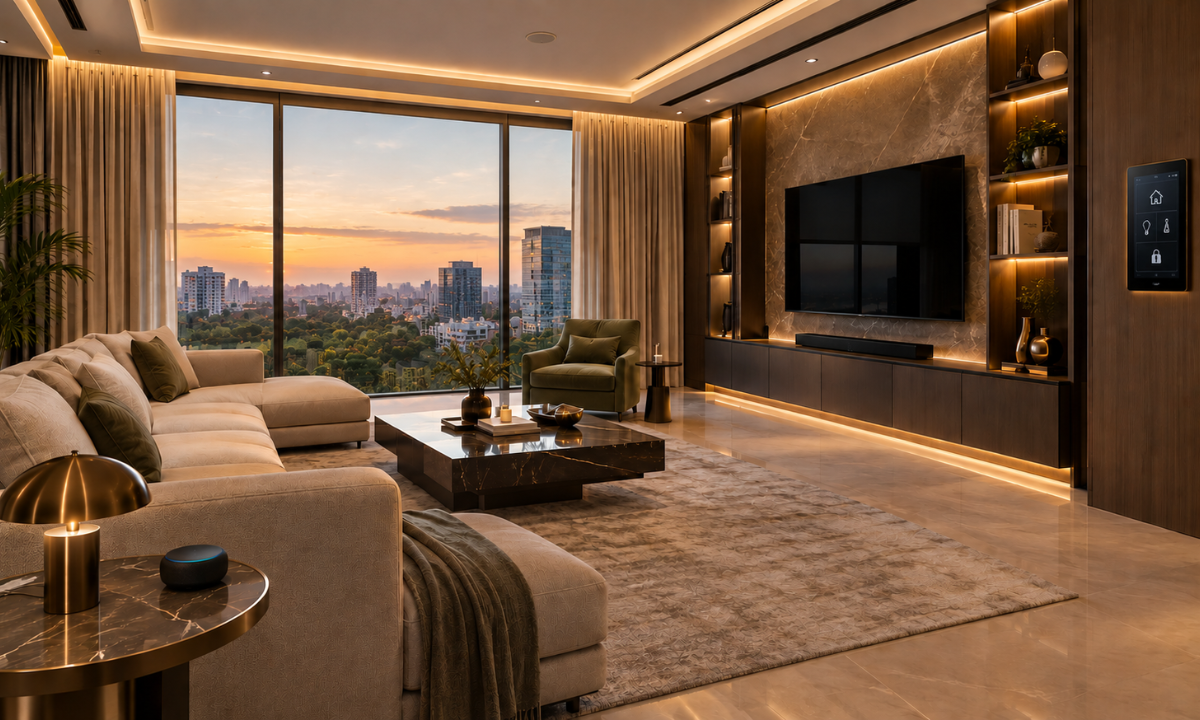
A marble or limestone wall behind the television, fireplace, or seating area can establish the room’s visual centre.
If the stone has strong veining, furniture should generally remain more restrained.
If the stone is subtle, richer furniture textures can be introduced.
This balance helps prevent the space from feeling visually overloaded.
Stone and Wood: A Natural Luxury Combination
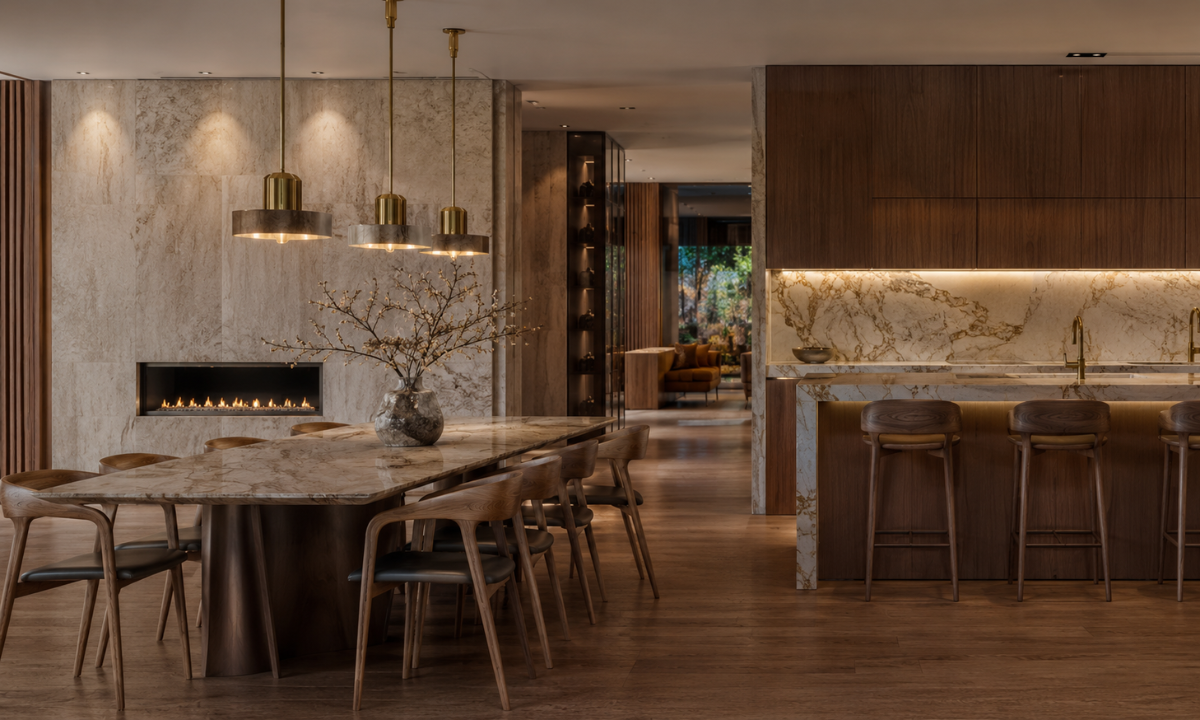
Stone and timber are among the most effective combinations in luxury interiors.
Stone brings:
- Visual weight
- Natural movement
- Durability
- Coolness
Wood brings:
- Warmth
- Texture
- Comfort
- Organic character
For example:
Travertine + natural oak + bronze
can create a warm contemporary interior.
While:
Calacatta marble + walnut + brushed brass
can produce a more dramatic luxury aesthetic.
The combination works best when one material is allowed to dominate and the other supports it.
Stone and Metal Finishes
Metal details can add refinement to stone interiors.
Popular finishes include:
- Brushed brass
- Bronze
- Champagne
- Gunmetal
- Stainless steel
Metal can be introduced through:
- Handles
- Furniture
- Lighting
- Cabinet trims
- Staircase details
- Decorative profiles
The objective should be subtle contrast rather than excessive metallic decoration.
Luxury Stone in the Kitchen
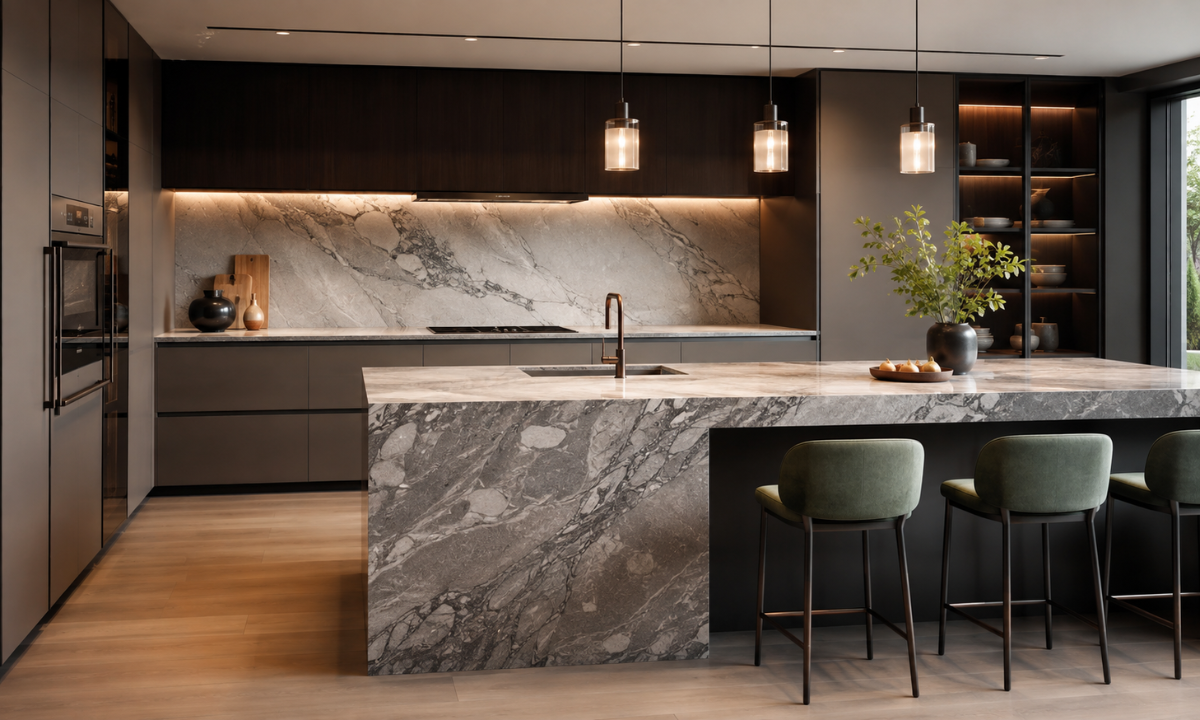
The kitchen is one of the most important areas where stone needs to balance appearance with performance.
Stone can be used for:
- Kitchen islands
- Countertops
- Backsplashes
- Breakfast counters
- Feature walls
However, kitchens are exposed to heat, moisture, oil, acids, and regular cleaning.
The specific material should therefore be selected according to its intended application.
Natural marble can be beautiful, but it may require more care than some alternative surfaces.
The designer should consider both aesthetics and everyday usage before recommending a material.
Luxury Stone Bathroom Design
Stone can turn an ordinary bathroom into a more spa-like environment.
Large-format surfaces can create a calm, continuous appearance.
Stone can be used for:
- Walls
- Floors
- Vanity counters
- Shower walls
- Niches
- Bathtub surrounds
A restrained material palette can make the bathroom feel more luxurious than combining multiple decorative surfaces.
For example, one primary stone combined with warm lighting and refined metal fittings can create a sophisticated result.
Luxury Stone Staircase Design
A staircase can become one of the most striking architectural features in a large home.
Stone can be used for:
- Treads
- Risers
- Landings
- Staircase walls
It can be combined with:
- Glass
- Timber
- Bronze
- Brass
- Minimal metal detailing
The staircase should be designed as part of the home’s architecture rather than treated as a separate element.
Backlit Stone and Onyx
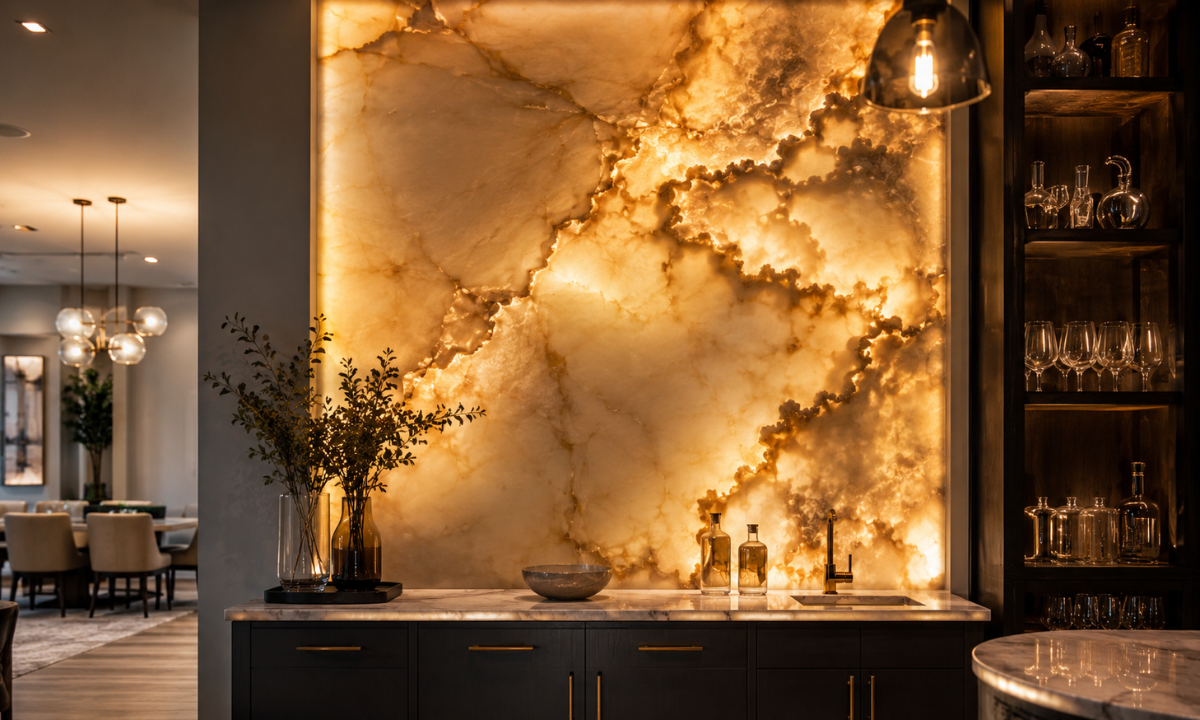
Backlighting can dramatically change the appearance of certain translucent stones.
Onyx is particularly suitable for this approach.
A backlit stone wall can be used in:
- Home bars
- Dining rooms
- Entrance foyers
- Private lounges
- Powder rooms
The lighting needs to be carefully controlled.
Too much brightness can reduce the natural beauty of the stone.
The objective is to reveal the depth of the material rather than make the light source itself obvious.
Choosing the Right Stone
Choosing stone for a luxury home should not be based only on a small sample.
Natural materials can look very different across a full slab.
View the Actual Slabs
Whenever possible, inspect the actual material before approval.
Study the Veining
Look at how the natural movement will work with the room.
Check Slab Availability
Make sure there are enough slabs for the complete application, particularly if matching is required.
Consider Lighting
View the stone under different lighting conditions.
Think About Maintenance
Different stones have different care requirements.
Plan the Layout
Stone placement should be decided before fabrication and installation.
Stone Finishes for Luxury Interiors
The same stone can look very different depending on its finish.
Polished
A polished surface provides reflection and can enhance colour and veining.
Honed
A honed surface is softer and less reflective.
It works well with contemporary and understated luxury interiors.
Textured
Textured finishes can introduce tactile depth and a more natural appearance.
The finish should be selected according to the application, maintenance requirements, lighting, and design style.
How Much Does Luxury Stone Interior Design Cost?
There is no universal price for luxury stone interiors.
The overall investment can depend on:
- Stone type
- Origin
- Slab quality
- Thickness
- Surface area
- Veining
- Availability
- Transportation
- Cutting
- Fabrication
- Installation
- Sealing
- Book-matching
- Edge detailing
A simple stone floor will have a very different cost from a bespoke project involving imported marble, book-matched walls, custom fabrication, integrated lighting, and precision installation.
This is why luxury interior projects should be evaluated according to the complete specification rather than a generic per-square-foot rate.
Natural Stone vs Stone-Look Materials
Modern interiors offer many alternatives to natural stone.
Porcelain slabs, engineered quartz, sintered surfaces, and other manufactured materials can replicate the appearance of marble, limestone, and other stones.
They may offer advantages such as:
- Consistent patterns
- Different maintenance characteristics
- Wider availability
- Different price points
However, natural stone has its own character.
Its variations, mineral movement, and geological history are part of its appeal.
The right choice depends on the location, usage, maintenance expectations, budget, and design objective.
Common Luxury Stone Design Mistakes
Using Too Many Different Stones
Every room does not need a different statement stone.
A controlled material palette creates greater visual consistency.
Choosing a Stone Only Because It Is Expensive
Price does not automatically determine whether a material is suitable.
Ignoring the Full Slab
A small sample cannot always reveal the complete pattern.
Poor Vein Planning
Incorrect placement can interrupt the natural movement of the stone.
Ignoring Maintenance
A beautiful material may require more care than expected.
Overusing High-Contrast Stone
Dramatic stone can become overwhelming if used on every surface.
Poor Lighting
Lighting can either enhance or flatten the natural character of stone.
Luxury Stone for Gurgaon Homes
Gurgaon’s luxury residential market includes premium apartments, penthouses, villas, and expansive private residences.
The appropriate stone strategy can vary depending on the property.
Luxury Apartments
Stone can be used selectively for entrance foyers, living rooms, kitchens, bathrooms, and feature walls.
Penthouses
Larger spaces can accommodate statement stone walls, large-format flooring, dramatic staircases, and private entertaining areas.
Luxury Villas
Villas offer opportunities for more extensive stone applications across double-height spaces, staircases, living areas, bathrooms, home bars, and outdoor-connected spaces.
The design should always respond to the architecture rather than applying the same material formula to every property.
Luxury Stone and Quiet Luxury
Modern luxury is increasingly about restraint.
Instead of using expensive materials everywhere, designers are focusing on fewer materials with stronger architectural presence.
A carefully selected limestone floor, a single book-matched marble wall, or a softly illuminated onyx feature can create more impact than multiple competing finishes.
This is where stone becomes part of the architecture rather than simply a decorative surface.
The material should feel intentional.
The AEK Approach to Luxury Stone Interior Design
The AEK Ultra Luxury Interior Designer approach treats stone as an architectural material that needs to be considered alongside the entire interior.
The selection of stone can be coordinated with:
- Architecture
- Furniture
- Woodwork
- Lighting
- Metal finishes
- Colour palette
- Spatial proportions
For a luxury residence, the process can involve reviewing full slabs, planning vein direction, coordinating book-matching, selecting the appropriate finish, and ensuring precise fabrication and installation.
The objective is not simply to use more stone.
It is to use the right stone in the right location and allow its natural character to strengthen the overall design.
This approach is particularly important for ultra-luxury homes, where material transitions, joints, edges, lighting, and installation quality can have a significant effect on the final appearance.
Final Thoughts
Luxury stone interior design is ultimately about more than expensive materials.
It is about understanding the character of stone and giving it the right architectural setting.
Italian marble can provide dramatic veining. Travertine can bring warmth and natural texture. Limestone can create a quieter atmosphere. Onyx can introduce translucency and visual drama. Granite can provide durability in high-use areas.
The most successful luxury interiors use these materials with restraint.
Instead of asking how much stone can be added to a home, ask where stone can create the greatest architectural impact.
When natural stone is carefully selected and combined with wood, metal, lighting, furniture, and thoughtful spatial planning, it can become one of the defining elements of a luxury residence.
The AEK Ultra Luxury Interior Designer approach brings together material expertise, architectural planning, bespoke detailing, and precision execution to create luxury interiors where natural stone feels purposeful, refined, and timeless.
Frequently Asked Questions
What is luxury stone interior design?
Luxury stone interior design involves using natural or premium stone as an important architectural and interior element. It can include flooring, walls, kitchens, bathrooms, staircases, countertops, and bespoke features.
Which stone is best for luxury interiors?
There is no single best stone. Marble, Travertine, limestone, onyx, and granite can all work well depending on the room, design style, maintenance requirements, and desired appearance.
Is natural stone better than porcelain?
Not necessarily. Natural stone offers unique variation and authenticity, while porcelain can provide consistent patterns and different practical characteristics. The right option depends on the project.
Can stone and wood be used together?
Yes. Stone and wood complement each other particularly well. Stone provides visual weight and natural movement, while wood adds warmth and texture.
Is marble suitable for kitchen interiors?
Certain marble varieties can be used in kitchens, but homeowners should consider heat, stains, acids, scratches, sealing, and maintenance before making a selection.
What is book-matched stone?
Book-matching involves positioning stone slabs so that their natural patterns create a mirrored or continuous visual effect. It is commonly used for statement walls.
How much does luxury stone interior design cost?
The cost varies according to the stone, slab quality, origin, surface area, fabrication, installation, finish, transportation, and level of customisation. A project-specific quotation provides a more accurate figure.
Why choose The AEK for luxury stone interiors?
The AEK Ultra Luxury Interior Designer approach integrates stone selection with architecture, woodwork, lighting, furniture, and bespoke detailing. This helps ensure that premium materials contribute to the overall design rather than appearing as isolated decorative elements.