
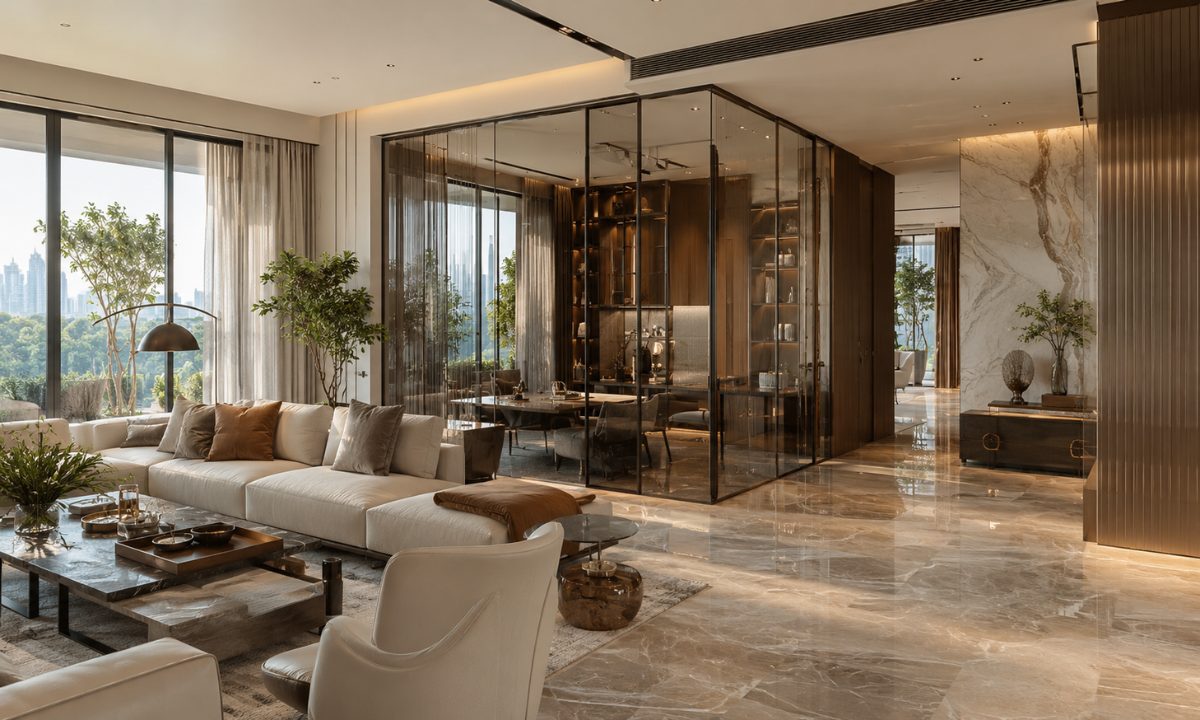
Luxury Glass Interior Design Guide: Elegant Ideas for Modern Luxury Homes
When people think about luxury interiors, they often picture marble floors, designer furniture, beautiful lighting, or custom woodwork. But glass can be just as important.
Used thoughtfully, glass can make a home feel brighter, more open, and visually lighter. It can separate spaces without making them feel closed off, bring more natural light into a room, and add a clean, contemporary touch.
That is why luxury glass interior design is becoming an important part of high-end homes, particularly in Ultra Luxury Interiors in Gurgaon.
The key, however, is not to use glass everywhere. Too much glass can make a home feel cold or lack privacy. The best interiors use it selectively and combine it with materials such as natural stone, wood, metal, and soft furnishings.
What Is Luxury Glass Interior Design?
Luxury glass interior design means using glass as an intentional part of the home’s architecture and interiors.
It can be used for:
- Glass partitions
- Internal doors
- Staircase railings
- Walk-in wardrobes
- Kitchen partitions
- Display cabinets
- Home bars
- Shower enclosures
- Feature walls
- Decorative panels
The type of glass makes a big difference to the final look.
Clear glass creates openness, while fluted or frosted glass gives more privacy. Smoked glass adds a darker, richer feel, and textured glass can bring more character to an otherwise simple space.
Why Glass Works So Well in Luxury Homes
One of the biggest advantages of glass is that it can divide a room without making it feel smaller.
For example, a home office next to the living room can be separated with a glass partition. You still get a defined workspace, but the natural light and visual connection between the two areas remain.
Glass can also help:
- Bring more light into interiors
- Make rooms feel more spacious
- Create visual continuity
- Add a modern appearance
- Highlight architectural features
- Connect different areas of the home
When combined with the right materials, it can feel warm and luxurious rather than cold and overly modern.
Clear Glass for an Open Feel
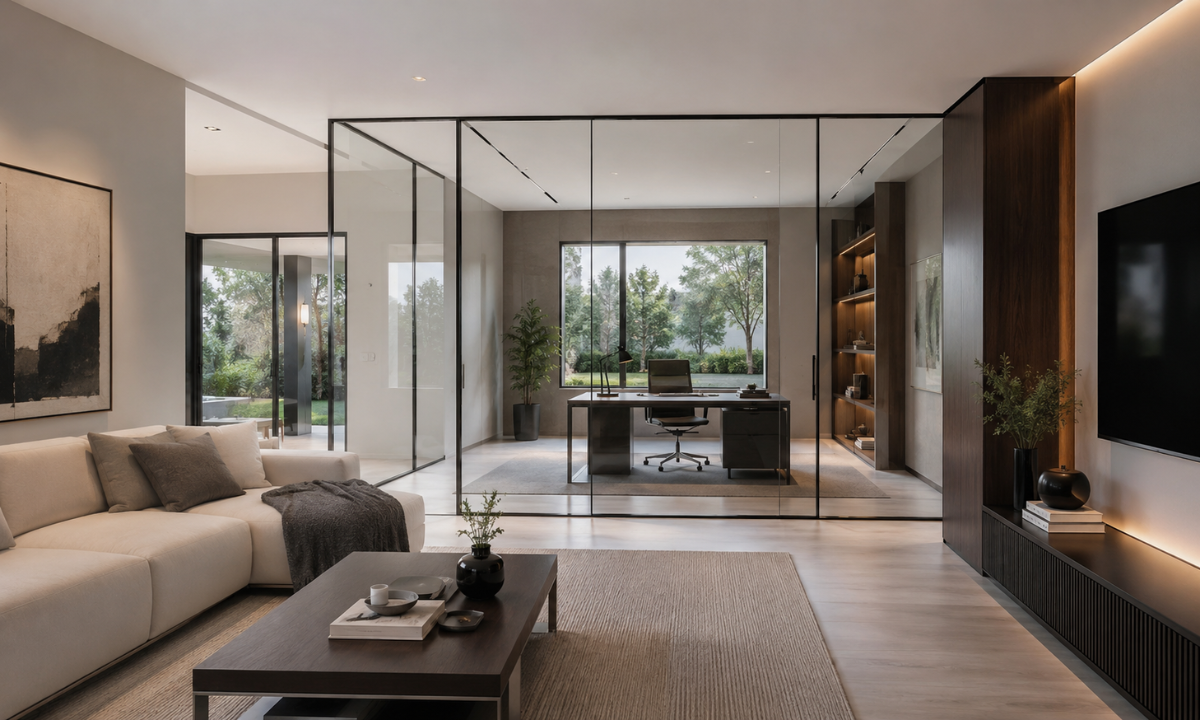
Clear glass is a simple choice when you want to maintain a visual connection between spaces.
It works well for:
- Staircase railings
- Internal partitions
- Shower enclosures
- Doors
- Display cabinets
- Home offices
For example, a clear glass partition between the living room and study can give the study its own identity without making it feel like a separate, enclosed room.
Minimal framing can make the installation feel even more seamless.
Fluted Glass for Privacy and Style
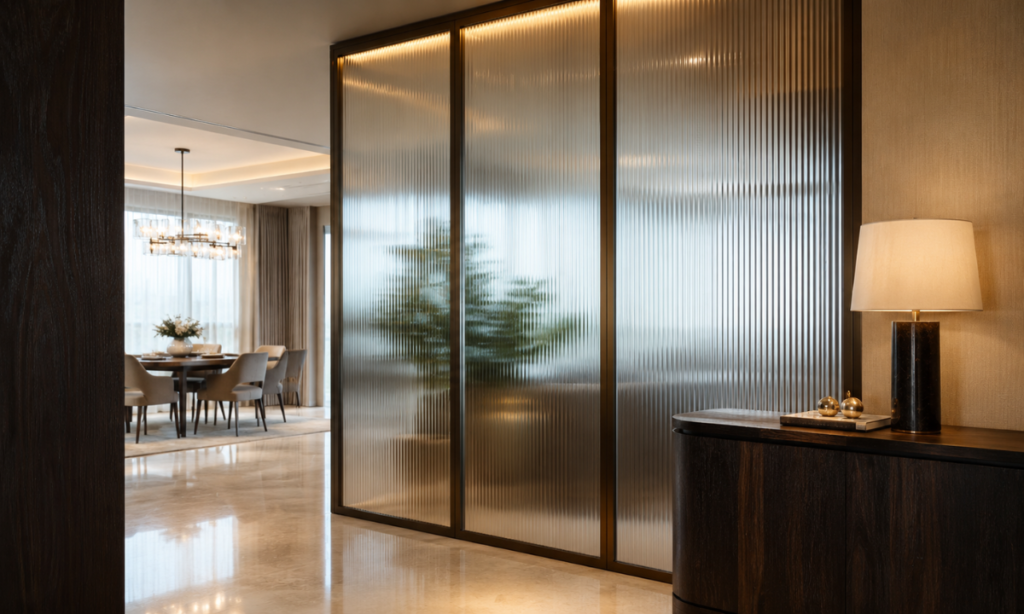
Fluted glass has become popular in modern luxury interiors for a good reason.
Its vertical texture allows light to pass through while making the view less clear. This gives you some privacy without completely blocking light.
It works beautifully for:
- Kitchen partitions
- Wardrobes
- Room dividers
- Cabinet shutters
- Entryways
- Bathroom doors
- Home bars
Fluted glass also adds texture, so you can create visual interest without adding another decorative wall treatment.
Smoked Glass for a Sophisticated Look
If you want something darker and more dramatic, smoked glass can be a great option.
It works particularly well with:
- Walnut
- Dark wood
- Marble
- Bronze
- Brass
- Warm lighting
Smoked glass is often used for wardrobes, display cabinets, bars, and internal partitions.
One thing to keep in mind is lighting. If the room is already dark, using too much smoked glass can make it feel heavier.
Tinted and Frosted Glass
Tinted glass can introduce a subtle colour into the interior, while frosted glass provides more privacy.
These options can be useful for spaces where completely transparent glass is not practical.
For example, frosted or textured glass can work well in a bathroom or private room where you still want natural light without direct visibility.
The colour and texture should complement the rest of the interior rather than stand out as a separate feature.
Glass Partitions for Luxury Homes
Glass partitions are one of the most practical ways to introduce glass into a home.
They can be used to separate:
- Living and dining areas
- Living room and study
- Kitchen and dining
- Foyer and living room
- Bedroom and dressing area
The biggest advantage is that the spaces remain visually connected.
A bronze-framed fluted glass partition, for example, can give a room definition while adding a subtle architectural feature.
Glass Doors
Glass doors can make transitions between rooms feel lighter.
They can be used for:
- Home offices
- Kitchens
- Walk-in wardrobes
- Bathrooms
- Living areas
- Home bars
Depending on the style of the home, you can choose clear, fluted, frosted, smoked, or tinted glass.
The hardware matters too. A beautifully designed glass door can losgle some of its appeal if the handles, hinges, tracks, or frames look out of place.
Glass Staircase Design
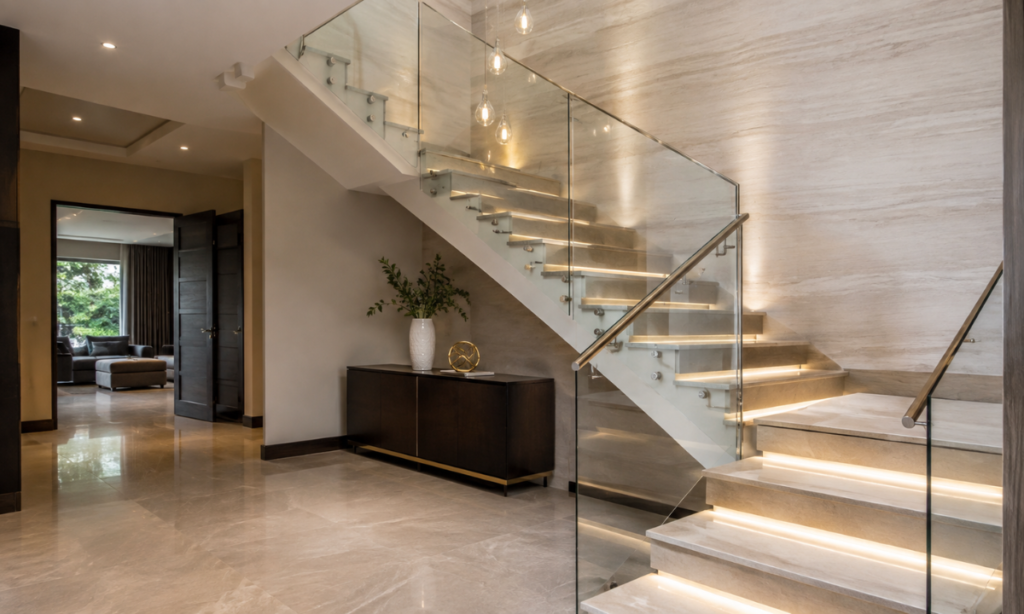
A staircase can be one of the most striking elements in a luxury home.
Glass railings can make the staircase feel lighter and allow the surrounding architecture to remain visible.
Glass works especially well with:
- Marble steps
- Wooden steps
- Floating staircases
- Metal structures
For example, marble steps with a clear glass railing and subtle bronze detailing can create a sophisticated contemporary look.
The staircase becomes part of the interior design rather than simply a functional element.
Glass and Italian Marble
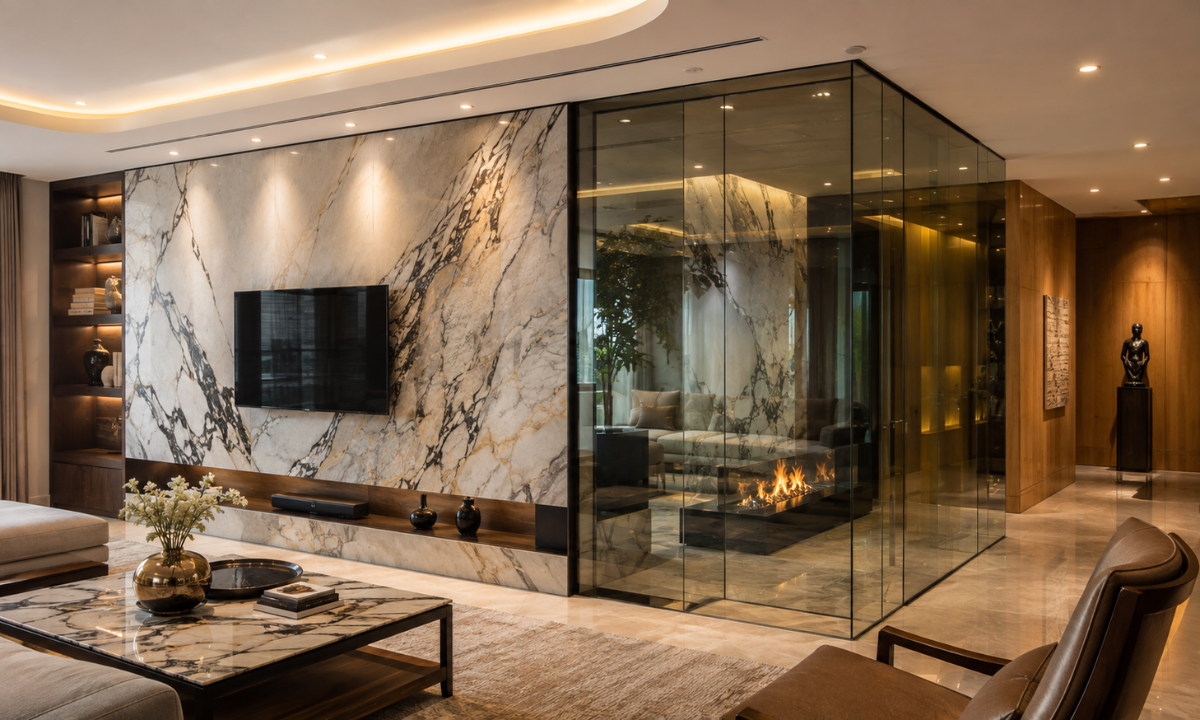
Glass and marble complement each other naturally.
Marble brings texture, movement, and visual weight.
Glass brings transparency and lightness.
Together, they can create a balanced luxury interior and inspire elegant Italian interior design for luxury homes.
A dramatic marble wall behind a clear glass partition can create depth without making the room feel crowded.
This combination can work particularly well in:
- Living rooms
- Entrance foyers
- Bathrooms
- Staircases
- Dining areas
Glass and Premium Woodwork
Glass can also help balance the heavier appearance of timber.
For example, a walnut wardrobe with smoked glass shutters can feel more elegant and lighter than a completely solid wardrobe.
Similarly, a timber partition with fluted glass inserts can separate two areas while still allowing light to move through the space.
The combination of wood, glass, and warm lighting is particularly effective when creating a comfortable luxury home.
Luxury Glass Wardrobes
Glass wardrobes can give a bedroom or dressing room a boutique-like appearance.
They can include:
- Smoked glass shutters
- Fluted glass
- Clear glass
- Integrated LED lighting
- Bronze or aluminium frames
- Custom drawers
- Accessory storage
In a walk-in wardrobe, glass can also make clothes and accessories easier to see while keeping the overall design neat.
Integrated lighting can take the look a step further and create a private dressing-room experience.
Glass Display Cabinets
If you have artwork, books, collectibles, barware, or decorative objects that you want to display, glass cabinets can be a good solution.
They keep the items visible while offering some protection from dust.
You can also add integrated lighting to highlight selected pieces.
The trick is not to fill every shelf.
A few carefully chosen objects usually look much more refined than a cabinet packed with décor.
Glass Home Bars
A home bar is another area where glass can make a strong impression.
You can use glass for:
- Cabinet shutters
- Display shelves
- Backlit panels
- Barware storage
- Display doors
Pairing smoked glass with walnut, stone, bronze, and warm lighting can create a sophisticated atmosphere without making the bar feel overly decorative.
Glass in Luxury Bathrooms
Glass is already a natural part of modern bathroom design.
A frameless shower enclosure can make a bathroom feel larger and cleaner.
If privacy is a concern, fluted or frosted glass can provide a better solution.
Glass can be combined with:
- Italian marble
- Travertine
- Natural stone
- Brushed brass
- Bronze
- Warm lighting
The design should look elegant, but practical considerations such as cleaning, water exposure, and safety should also be considered.
Backlit Glass
Backlighting can completely change the way glass looks.
Instead of simply using glass as a transparent surface, it can become a glowing architectural feature.
Backlit glass can be used in:
- Dining areas
- Home bars
- Entrance foyers
- Powder rooms
- Bedrooms
- Display walls
The light source should ideally remain hidden so that the glass itself creates the visual effect.
Glass and Natural Light
One of the biggest reasons to use glass in a home is to make better use of natural light.
A solid wall can stop daylight from reaching another part of the house. A glass partition can allow that light to travel further.
This can be especially useful in:
- Internal studies
- Passageways
- Dining areas
- Staircases
- Dressing areas
The result can be a home that feels brighter without relying entirely on artificial lighting.
Choosing the Right Glass
The right glass depends on where it will be used.
Before making a selection, consider:
- Privacy
- Transparency
- Thickness
- Texture
- Colour
- Safety
- Hardware
- Maintenance
- Installation requirements
For areas such as staircases, doors, shower enclosures, and large panels, the appropriate safety glass specification should be used.
A luxury finish should never come at the expense of safety.
How Much Does Luxury Glass Interior Design Cost?
There is no fixed price for luxury glass interiors.
The final cost depends on:
- Glass type
- Thickness
- Size
- Texture
- Tint
- Frame
- Hardware
- Customisation
- Lighting
- Installation
A simple clear-glass partition will naturally have a different cost from a custom fluted-glass partition with bronze framing and integrated lighting. When planning an interior design budget, it is better to compare the complete specification and installation rather than only the glass rate.
Common Mistakes to Avoid
Using Too Much Glass
Glass works best when it has a clear purpose. Covering every wall or partition with glass can make a home feel cold.
Forgetting Privacy
Clear glass is not suitable for every space. Fluted, frosted, or tinted options may be more appropriate in private areas.
Ignoring Lighting
The appearance of glass can change significantly depending on the lighting around it.
Choosing Poor Hardware
Handles, hinges, frames, and tracks are highly visible. They should complement the quality of the glass and the overall interior.
Making Maintenance Difficult
Large glass surfaces look beautiful when clean, but they need regular maintenance. Accessibility should be considered during the design stage.
Ignoring Safety
The appropriate safety specification should always be considered for glass used in doors, staircases, bathrooms, and other high-use areas.
Luxury Glass Interior Design for Gurgaon Homes
Gurgaon has a wide range of premium residential properties, including apartments, penthouses, villas, and large private homes.
Glass can be adapted according to the property.
Luxury Apartments
Glass can help create a sense of openness in apartments through partitions, wardrobes, kitchen dividers, bathrooms, and internal doors.
Penthouses
Large open spaces, double-height areas, staircases, and expansive living areas provide more opportunities for architectural glass.
Luxury Villas
Villas can incorporate glass into staircases, dressing rooms, home bars, internal partitions, entertainment spaces, and larger architectural features.
The design should always respond to the home’s layout and the way the family actually uses the space.
Glass and Quiet Luxury
Luxury does not always have to be dramatic.
A simple frameless glass partition, a subtly smoked wardrobe, or a fluted glass door can add sophistication without demanding attention.
This works particularly well with the quiet-luxury approach, where the emphasis is on quality materials, good proportions, comfort, and thoughtful details.
Glass can provide that sense of refinement when it is used with restraint.
The AEK Ultra Luxury Interior Designer Approach
The AEK Ultra Luxury Interior Designer approach treats glass as part of the overall architecture rather than simply another decorative material. This approach to bespoke luxury homes considers glass alongside natural stone, premium woodwork, metal finishes, furniture, and lighting.
Glass can be selected and detailed alongside:
- Natural stone
- Premium woodwork
- Metal finishes
- Furniture
- Lighting
- Architecture
- Privacy requirements
For a high-end residence, this means looking beyond the glass itself.
The frame, hardware, lighting, proportions, joints, and installation all contribute to the final appearance.
A glass partition should feel like it belongs to the architecture. A wardrobe should look like part of the bedroom. A staircase should feel light and connected to the surrounding space.
This level of planning is especially important in an ultra-luxury home, where small details can have a noticeable impact.
Final Thoughts
Luxury glass interior design is about finding the right balance.
Clear glass can keep spaces open. Fluted glass can provide privacy and texture. Smoked glass can add depth, while backlit glass can create a dramatic focal point.
But glass works best when it is combined thoughtfully with other materials.
Pair it with Italian marble for contrast, natural wood for warmth, refined metal for detail, and carefully planned lighting for atmosphere.
The result does not have to feel cold or overly modern.
It can feel warm, elegant, comfortable, and highly personal.
For homeowners creating a luxury residence in Gurgaon, the focus should therefore be on more than selecting attractive glass. The material, hardware, lighting, safety, architecture, and installation all need to work together.
The AEK Ultra Luxury Interior Designer approach brings these elements together to create refined interiors where glass feels purposeful, elegant, and naturally integrated into the home.
Frequently Asked Questions
What is luxury glass interior design?
Luxury glass interior design uses premium glass as part of a home’s architectural and interior elements, including partitions, doors, wardrobes, staircases, bathrooms, display units, and decorative features.
Which glass is best for luxury interiors?
It depends on the application. Clear, fluted, frosted, smoked, tinted, and textured glass can all work well depending on the desired appearance and privacy requirements.
Is fluted glass suitable for luxury homes?
Yes. Fluted glass adds texture and can provide privacy while still allowing light to pass through. It works well for partitions, wardrobes, doors, and cabinets.
Can glass be combined with Italian marble?
Yes. Marble provides visual weight and natural movement, while glass adds lightness and transparency. Together they can create a sophisticated contemporary interior.
Is glass safe for home interiors?
Appropriately specified safety glass can be used for many interior applications. The correct specification should be selected according to the location and intended use.
How much does luxury glass interior design cost?
The cost depends on the glass type, size, thickness, framing, hardware, customisation, lighting, and installation. A detailed project quotation will provide a more useful estimate.
Can glass make a small room look bigger?
Yes. Glass partitions can maintain visual continuity and allow light to pass between spaces, helping a room feel more open.
Why choose The AEK for luxury glass interiors?
The AEK Ultra Luxury Interior Designer approach coordinates glass with architecture, stone, woodwork, furniture, lighting, and hardware to create a cohesive luxury interior rather than treating glass as an isolated feature.